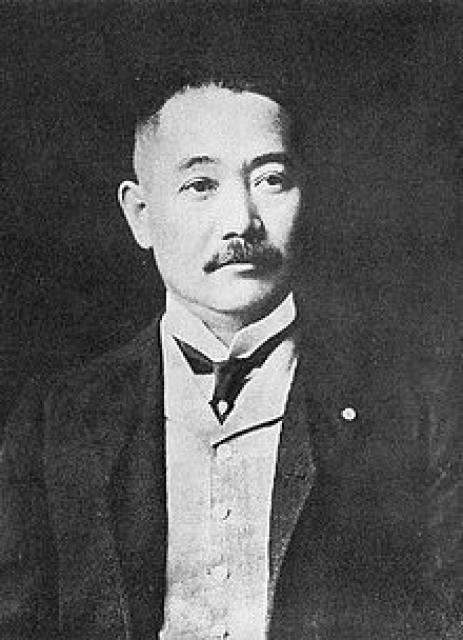
Kojiro Matsukata
 Japan
Japan- Kojiro Matsukata: Visionary Industrialist and Art Collector
- Formative Years and Early Career
- Transforming Kawasaki into a Leading Industry
- Passion for Art Collecting
- Financial Setbacks and Collection's Fate
- Legacy and Founding of the Museum
Kojiro Matsukata: Visionary Industrialist and Art Collector
Kojiro Matsukata, born in Satsuma, Japan (present-day Kagoshima Prefecture) in 1865, was an extraordinary figure who made significant contributions to both Japan's industrial development and its cultural legacy.
Formative Years and Early Career
Matsukata received his education in the United States before returning to Japan to serve as the secretary to Prime Minister Matsukata Masayoshi, his father, during his administration from 1891 to 1892. Recognizing Kojiro's potential, Shozo Kawasaki, head and founder of Kawasaki, chose him as his successor. In 1896, Matsukata became the first president of Kawasaki Dockyard Co., Ltd.
Transforming Kawasaki into a Leading Industry
Matsukata held the position of president for 32 years, until 1928. Under his leadership, Kawasaki expanded its operations to include rolling stock, aircraft, and shipbuilding. Matsukata also introduced innovative measures, such as the eight-hour workday, which contributed to Kawasaki's rise as a leading industrial conglomerate in Japan.
Passion for Art Collecting
Beyond his business acumen, Kojiro Matsukata was renowned as an avid art collector. Believing that Japan's future prosperity hinged on its embrace of Western culture, Matsukata aspired to establish a museum in Tokyo that would introduce Western art and culture to the Japanese public.
Matsukata traveled extensively throughout Europe, investing his wealth in thousands of European masterpieces, including paintings, sculptures, and other works of art. He was known for his close friendship with Claude Monet.
Financial Setbacks and Collection's Fate
In 1927, financial difficulties forced Matsukata to sell a significant portion of his collection. The remaining pieces were stored in warehouses in London and Paris. Tragedy struck in 1939 when the London warehouse and the paintings it contained were destroyed by fire.
Only the collection stored in Paris remained. During World War II, the French government claimed ownership of the collection, which was returned to Japan in 1959 under the terms of the San Francisco Peace Treaty. The collection consisted of 370 works, including 196 paintings and 63 sculptures, among them a copy of Auguste Rodin's "The Thinker" statue, now displayed in front of the National Museum of Western Art in Tokyo.
Legacy and Founding of the Museum
Despite the loss of a portion of his collection, Matsukata's vision for a museum of European art lived on. Although he did not achieve this goal during his lifetime, the National Museum of Western Art in Tokyo, established in 1959, was founded around his private collection.
Matsukata's commitment to art extended beyond European masterpieces. He also began collecting Japanese ukiyo-e prints from around the world in the early 20th century. Matsukata assembled 1,925 ukiyo-e prints abroad and is believed to have been the first Japanese collector of ukiyo-e. Today, approximately 8,000 ukiyo-e from Matsukata's collection are housed at the National Museum of Modern Art in Tokyo.
Kojiro Matsukata's legacy as an industrialist and art collector serves as a testament to his vision, dedication, and passion for both Japan's economic and cultural development. His contributions continue to enrich the lives of countless people around the world.