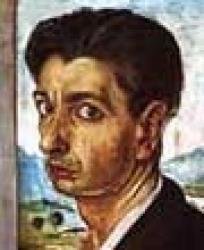
Konrad Kujau
 Germany
Biography of Conrad Kujau
Conrad Kujau, the King of Forgeries, was born into a poor family in Stuttgart, Germany. His father was a shoemaker, and his mother died when he was young, leading to Kujau and his siblings being placed in orphanages. At the age of 16, Kujau began working as a locksmith's assistant, but soon turned to petty theft, which landed him in and out of prison.

After his release from prison, Kujau decided to leave East Germany (GDR) and settled in the town of Stuttgart. In the early 1970s, he discovered his true calling and started selling prohibited Nazi memorabilia imported from the Eastern regions of Germany. This included old military uniforms, awards, and patches. It was during this time that Kujau realized collectors valued the historical significance of the items more than their rarity. Utilizing his vivid imagination and wit, he began creating elaborate stories to enhance the value of his merchandise. He even sold a collector 'Adolf Hitler's ashes.' Kujau also possessed a unique talent as an artist, and he began selling his own paintings, claiming they were works by Hitler.

Kujau's skill in reproducing the handwriting and style of famous painters was so remarkable that experts could only differentiate his copies from the originals through chemical analysis. This talent allowed him to replicate the handwriting and style of renowned artists with absolute precision.

Famous Forgery Scandal
In 1978, after his previous exploits, Kujau decided to sell a diary he claimed to have written himself, titled 'Hitler's Diary,' to an enthusiastic Nazi-era collector. In 1980, Kujau met journalist Gerd Heidemann and told him a story about his brother serving in the East German army and stumbling upon Hitler's diaries. Heidemann, who had extensively studied Hitler's handwriting, confirmed the authenticity of the diaries and convinced the magazine 'Stern' to buy them for 9 million marks. The handwriting analysis was to be conducted secretly overseas to ensure the sensational story was kept under wraps.

The diaries were published in 'Stern' magazine, and its circulation skyrocketed. Other publications requested permission to publish the material. However, during a press conference, a question was raised about whether chemical analysis had been conducted on the diaries to determine their age. The analysis revealed that the diaries were, in fact, forgeries, causing a major scandal. Both Heidemann and Kujau were found guilty of fraud, with Heidemann receiving a four-year and eight-month sentence, and Kujau receiving a lesser sentence of four years and six months. Kujau was particularly infuriated that the diaries were referred to as poor forgeries.

Becoming a Celebrity
Kujau served only two years of his sentence due to his throat cancer diagnosis, which led to his early release. Upon his release, he had the idea to open a gallery called the 'Forgery Gallery,' where he would officially exhibit and sell his forgeries. He saw no reason to ignore his extraordinary talent for copying masterpieces. Kujau gained popularity and was frequently invited to television shows as a consultant on identifying fakes.
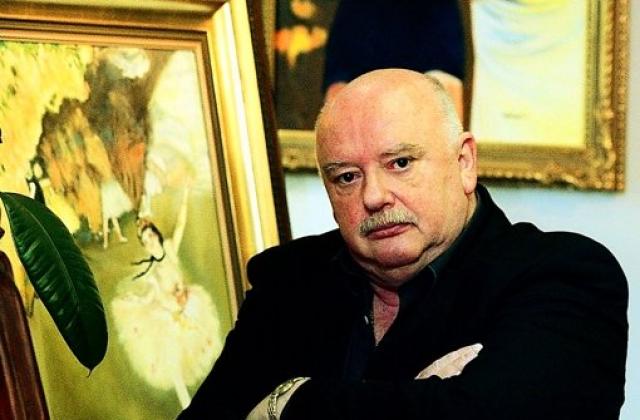
However, his success was short-lived. Kujau faced a lawsuit from a German organization that protested against the exhibition of his forgeries. The court ruled that he could no longer forge works by Picasso, Dali, and Chagall, as well as sell the existing copies he possessed. This ruling allowed Kujau to continue copying paintings by other artists, which he did for the remaining years of his life.
After Kujau's death from throat cancer in 2000, his grandniece Petra decided to open a museum in his memory in Pfullendorf. However, it was later discovered that Petra had been purchasing copies of famous paintings from Asia and passing them off as her grandfather's genius forgeries. As a result, the museum had to be closed. Despite inheriting Kujau's inclination for scams, Petra did not inherit his talent as a forger, as her schemes were quickly exposed.