Lawrence Alma-Tadema
 Germany
Lawrence Alma-Tadema: A Biography
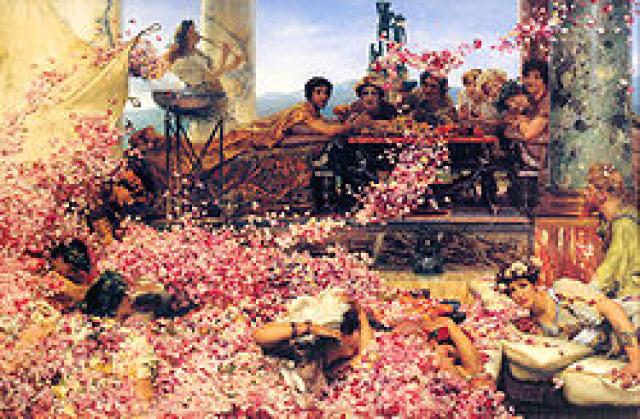
Lawrence Alma-Tadema was an English artist and one of the most renowned British painters of the 19th century. He specialized in historical and mythological subjects, gaining fame for his depictions of the luxury and decline of the Roman Empire. His paintings meticulously recreated the details of the bygone era and enjoyed great popularity in Britain, as evidenced by his knighthood.

Born on January 8, 1836, in Dronryp, northern Netherlands, Alma-Tadema was the sixth child of Peter Tadema, a rural notary. His names, Lawrence and Alma, were given in honor of his godfather. From 1852 to 1858, he studied at the Antwerp Academy of Fine Arts under the guidance of Hendrik Leys, a leading figure of Belgian Romanticism. During 1857 and 1858, Alma-Tadema collaborated with Leys on frescoes depicting Flemish history for the Antwerp City Hall. Initially, like Leys, he painted works with medieval motifs. However, after visiting the Apennine Peninsula in 1863, classical antiquity became the dominant theme of his art. To faithfully depict the details of that era, he engaged in archaeological research.
In 1870, Alma-Tadema moved to London, and in 1873, he acquired British citizenship. He also worked as a theatrical designer, creating sets for productions by John Henry Irving and Herbert Beerbohm Tree.
Alma-Tadema passed away on June 25, 1912, while undergoing treatment in Wiesbaden. His paintings enjoyed immense popularity during his lifetime, leading to his knighthood in 1899. This was largely due to the fact that Alma-Tadema's works allowed the Victorians to identify themselves with the Romans during the height of the empire. However, the perception of Alma-Tadema's art changed dramatically over time.
Many members of Lawrence Alma-Tadema's family were also involved in painting. His second wife, Laura, his wife's sister, Nelly Goss, and his daughter from his first marriage, Anna, all pursued careers in art. Laura Alma-Tadema's paintings were awarded a silver medal at the World Exhibition in Paris in 1878. In 1896, a major exhibition of her works in Berlin was honored with a gold medal.
Russian art museums house a significant number of works by another artist of the same period, Henryk Semiradsky, whose subjects and style are similar to Alma-Tadema's paintings.
The interiors of Alma-Tadema's house were decorated in the manner of the Roman Empire. The artist visited excavations in Pompeii and Herculaneum, immersing himself in the daily life of that era. By depicting Roman baths and dwellings, he essentially painted from life what actually existed in his own home.