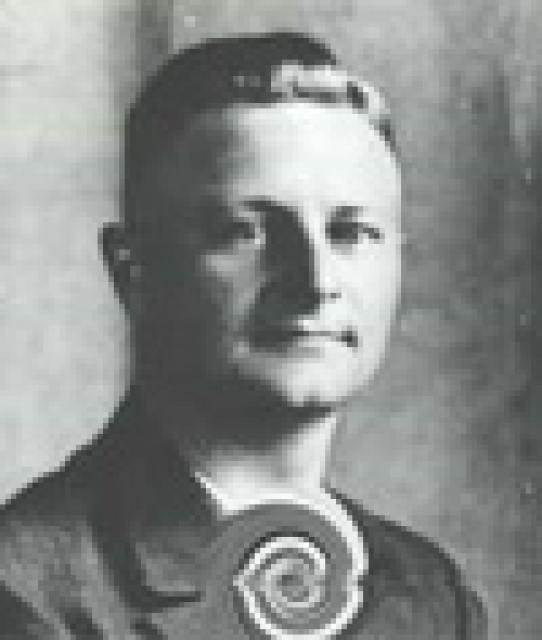
Kurt Gildisch
 Germany
- Biography of Kurt Gildisch
- Early Career and Involvement with the Nazi Party
- Role in the Night of the Long Knives
- Later Years and Death
Biography of Kurt Gildisch
Early Life and EducationKurt Gildisch was born in East Prussia to Paul Gildisch, a school teacher, and Marie Riel. He attended a rural elementary school in Potremschen, located 23 km southwest of Insterburg. After completing his education, Gildisch underwent teacher training until 1922. He passed the teaching exam in 1924 but was unable to find a teaching position, so he decided to join the police force. In January 1925, he was sent to the police school in Senburg, from which he left in September 1925.
Early Career and Involvement with the Nazi Party
In Berlin, Gildisch tarnished his reputation with a drunken incident and was expelled from the police force in 1931 due to his affiliation with the Nazi Party. Although officially under the control of Heinrich Himmler, Gildisch received orders directly from Adolf Hitler, much to Himmler's annoyance. However, Gildisch's problems with alcohol persisted, and after several months as the commander of the Begleitkommando, he was removed from his high-ranking position in June 1934. Despite warnings and demotions, Gildisch continued to drink while performing his duties, leading to his expulsion from the SS and the Nazi Party in 1936.
Role in the Night of the Long Knives
Gildisch played a significant role in Hitler's purge of the SA, known as the "Night of the Long Knives." He underwent military leadership training at the SS Junker School in Bad Tölz and was appointed as an untersturmführer in the Waffen-SS on April 20, 1941. From 1942 onwards, Gildisch actively fought on the Eastern Front. However, he was involved in a drunken incident in Russia on June 24, 1942, where he wounded several intoxicated junior officers and soldiers from a construction battalion.
Later Years and Death
On December 27, 1942, Theodor Eicke ordered Gildisch to be placed under house arrest for several weeks. From November to December 1943, Gildisch underwent rehabilitation at the Buchenwald concentration camp. In 1944, he was assigned to the 11th Volunteer Tank Division on the Soviet front. In August of the same year, Gildisch was wounded on the Eastern Front. On May 2, 1945, he was wounded again and captured by the Soviets during the Battle of Berlin. However, he was released in August 1946. Upon returning from captivity, Gildisch underwent a leg amputation, which was replaced with a prosthetic limb.
After World War II, Gildisch was initially unable to work due to his disabilities. Only after retraining did he manage to find employment as a bookbinder. In 1949, an old friend recognized him at a train station in Berlin and reported his crimes to the police. In May 1935, Gildisch stood trial and was accused of murdering Dr. Erich Klausener, the former head of the Prussian Ministry of the Interior's police department, during the Night of the Long Knives. Gildisch was sentenced to 15 years in prison. He died in 1956 from an incurable liver disease in a private hospital, after his criminal sentence was suspended due to a lack of proper medical treatment in prison.


