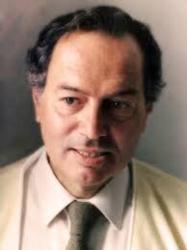
Lars Johan Werle
 Sweden
Early Life and Education
Per-Gunnar Wahlberg, a renowned Swedish composer, was born in 1932. His musical journey commenced during his school years, where he independently mastered musical notation and the art of playing the piano. Additionally, he led a jazz ensemble. Later, he pursued his education at Uppsala University (1948-51), where he studied under the tutelage of prominent musicologist Carl-Allan Moberg. Simultaneously, he honed his skills in polyphony and composition under the guidance of Sven-Erik Bäck (1949-52).
Career in Music
Wahlberg's professional career began as the head of the chamber music programs at Swedish Radio from 1958 to 1970. Subsequently, he joined the staff of the Royal College of Music in Stockholm (formerly the State School for Opera and Music). In 1977, he was appointed to a professorship in composition at the Gothenburg University College of Music.
International Recognition and Opera
Wahlberg gained international recognition for his serialist composition titled "Pentagram" for string quartet. This work was awarded the prestigious first prize at the Gaudeamus International Composers' Competition in the Netherlands in 1960. In the realm of opera, his most acclaimed masterpiece was "Drömmen om Thérèse" (The Dream of Thérèse), which debuted on the stage of the Royal Swedish Opera in Stockholm in 1964. This opera, based on Émile Zola's novella "Une nuit d'amour," was subsequently performed with great success at the Edinburgh Festival in 1974. Another notable work was "Resan" (The Journey), which premiered in Hamburg in 1969 and explored the theme of contrast between mundane suburban life and the surreal realm of mental experiences.
Other Musical Creations
Wahlberg's multifaceted musical output extended beyond opera to include chamber operas such as "Blomstermakt" (Flower Power, 1974) and "En midsommarnattsdröm" (A Midsummer Night's Dream, 1985). His ballet compositions included "Zodiac" (1966) and "Är gryningen redan här?" (Is the Dawn Already Here, 1980), a unique ballet with vocals inspired by Provençal troubadour poetry. He also composed numerous vocal-symphonic, choral, and chamber works, including the popular choral cantata "126 Cantigas de Petrarca" (1967), which incorporated madrigalisms in the style of Claudio Monteverdi. Wahlberg's music enriched the cinematic landscapes of Ingmar Bergman's films, including "Persona" (1966) and "Vargtimmen" (Hour of the Wolf, 1968), as well as Alf Sjöberg's "Ön" (The Island, 1966).