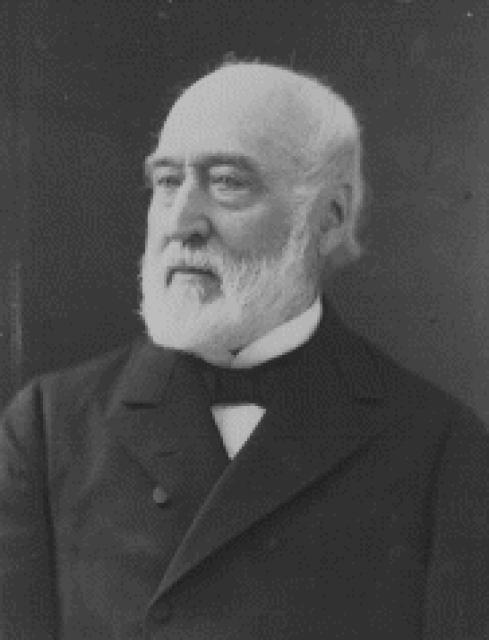
Lazare Hippolyte Carnot
 France
- Early Life and Education
- Intellectual Pursuits and Military Expertise
- Political Involvement
- Organizer of Victory
- Chairmanship and Presidency
Early Life and Education
Lazare Carnot, a French political figure, was born in 1753 as the second son of a Jewish lawyer. Despite being raised in a large family of 18 children, Carnot excelled academically. In 1773, he graduated from a military school and joined the engineering corps as a 1st lieutenant. After completing his studies at the Mézières School of Military Engineering, he served as an engineer in Calais and published his seminal work, "Essay on Machines," in 1784, earning acclaim from the scientist François Arago.
Intellectual Pursuits and Military Expertise
Carnot's intellectual prowess extended beyond military engineering. In 1783, he presented a memoir on aeronautics to the Academy of Sciences and received an award from the Dijon Academy for his eulogy on the military strategist Sébastien le Prestre de Vauban. His literary interests also included poetry. In 1788, his memoir "On the Usefulness of Fortresses on the Frontier" garnered attention, while the following year he incurred the displeasure of his superiors by challenging conventional wisdom on fortifications.
Political Involvement
Carnot's military expertise led to his involvement in politics. In 1791, he was elected as a deputy to the Legislative Assembly and became a member of the Diplomatic and Education Committees. However, his attention soon shifted to military affairs.
Organizer of Victory
In 1792, Carnot was elected to the National Convention, which tasked him with organizing the military defense on the Eastern Pyrenees border. His success led to his appointment to the Committee of Public Safety in 1793. As a member of the Committee, Carnot was instrumental in the annexation of territories to the Republic and the creation of 14 armies. His exceptional abilities in organizing and coordinating military operations earned him the title of "Organizer of Victory."
Chairmanship and Presidency
From May 1794 to May 1795, Carnot served as President of the National Convention. He was subsequently elected to the Directory, the executive body of the French government, and held the presidency twice, from 1796 to 1797. However, political conflicts within the Directory led to Carnot's downfall. In 1797, he was accused of royalist sympathies and forced to flee to Switzerland and later Southern Germany.