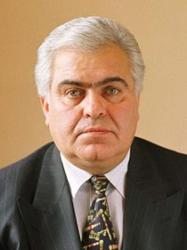
Leo Kaprivi
 Germany
Biography of Leo von Caprivi
Early Life and Military CareerLeo von Caprivi, full name Georg Leo Graf von Caprivi de Caprera de Montecuccoli, was born on February 24, 1831, in Charlottenburg, near Berlin. He began his military career in the Prussian army in 1849 and rose through the ranks to become a major general. Caprivi participated in the Austro-Prussian War of 1866 as a major in the general staff of the First Corps. During the Franco-Prussian War of 1870-1871, he served as a lieutenant colonel and chief of staff of the Fifth Corps. In 1877, he was promoted to the rank of general and in 1882, he was appointed commander of the 30th Division in Metz.
Political Career
Caprivi's political career began in 1883 when he took over as head of the Imperial Admiralty. He demonstrated exceptional administrative talent in this role. He later served as commander of the Tenth Corps before being called to Berlin by Kaiser Wilhelm II in February 1890. Caprivi was informed that the Kaiser wanted him to replace Otto von Bismarck as Chancellor of the German Empire if Bismarck did not agree to the proposed changes in the government. After Bismarck's resignation on March 18, 1890, Caprivi was appointed Chancellor of the German Empire and Minister-President of Prussia.
New Course Policy
Caprivi's government implemented a policy known among historians as the "New Course." This policy aimed to foster understanding with social democrats, as the Caprivi government did not continue the anti-socialist law of 1878. On the international front, Caprivi pursued closer relations with Great Britain, exemplified by the signing of the Zanzibar Treaty in July 1890. This treaty granted Germany the island of Heligoland in the North Sea in exchange for freedom of action regarding the Sultanate of Zanzibar. Caprivi also succeeded in acquiring an area in Africa known as the Caprivi Strip, which connected the German colony of German South West Africa to the Zambezi River. He also facilitated trade agreements with Austria-Hungary, Italy, Belgium, Switzerland, Romania, and Russia, receiving the title of Count on December 18, 1891.
Political Challenges and Resignation
Caprivi faced opposition from influential pro-colonial political groups due to the Zanzibar Treaty, while his free trade policies encountered resistance from conservative agrarians who favored protectionism. In 1892, after the failure of his education bill in the Prussian parliament, Caprivi resigned as Prussian Minister-President and was replaced by Count Botho zu Eulenburg. This resulted in an inconvenient division of power between the Chancellor and the Prussian Premier, which ended with the resignation of both on October 28, 1894, and their replacement by Prince Chlodwig zu Hohenlohe-Schillingsfürst.