Leon Gieco
 Argentina
- Biography of León Gieco
- Early Life and Musical Career
- Solo Career and International Recognition
- Later Career and Legacy
Biography of León Gieco
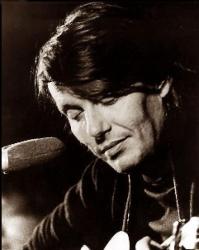
León Gieco, an Argentine pop-folk singer and composer, is known for his unique style that combines popular folk genres with Argentine rock. Many of his songs have a social and political undertone, earning him the nickname "The Argentine Bob Dylan." Gieco has released over 30 albums, with his latest, 'Un León D-mente,' being released in 2009.

Early Life and Musical Career
Raúl Alberto Antonio Gieco was born on November 20, 1951, on a farm near the small town of Cañada Rosquín in the northern part of the Santa Fe Province, Argentina. At the age of eight, he started working, and as he grew older, he bought his own guitar and began performing at school events and playing with the folk group 'Los Nocheros'. León also performed with the rock group 'Los Mocosos,' which quickly gained popularity in neighboring cities. They played songs by 'The Beatles,' 'Rolling Stones,' and 'Spencer Davis Group,' and in 1965, they won a competition to perform on Rosario TV Channel 5.
When León turned 18, he decided to try his luck in Buenos Aires. There, he met rock musicians Litto Nebbia and Gustavo Santaolalla, who found him interesting enough to play as an opening act for more well-known musicians. Following this, Gieco began collaborating with numerous musicians and performed at the Buenos Aires Rock Festival three times from 1971 to 1973. In 1973, his debut solo album, 'León Gieco,' was released, bringing him considerable recognition. The following year, he released his second album, 'La Banda de los Caballos Cansados,' which was in the same genre with socially themed lyrics. Gieco performed a series of concerts with a stable group of musicians and also performed as part of the supergroup 'Porsuigieco,' which released an album in 1976 and experienced success.
Solo Career and International Recognition
The disbandment of both groups pushed León to consider a solo career, which was well-received by the audience. In 1976, he released his third solo album, 'El fantasma de Canterville.' However, the recording was heavily censored by the military government, and Gieco had to change the lyrics of six songs and remove three completely. Despite this, the album gained much more popularity than his first two. Gieco went on tour not only in Argentina but also in other South American countries.
Two years later, he recorded an album with the concise title 'IV LP,' which featured one of his most famous songs, 'Sólo le pido a Dios.' Due to the dangerous political situation in Argentina, León was forced to move to the United States and settled in Los Angeles, California. In 1981, he performed a concert in Buenos Aires, playing on stage alone armed with a guitar, harmonica, and charango – a common instrument from the lute family in the Andes. That same year, his sixth album, 'Pensar en nada,' was released, followed by a three-year tour during which he traveled 110,000 kilometers, performed in front of 420,000 people, and gathered material for three more albums.
In 1985, Gieco visited Moscow for the 12th World Youth and Students' Festival, representing Argentina alongside Litto Nebbia and Juan Carlos Baglietto. He also gave several concerts in Germany with his friend and colleague Mercedes Sosa. In 1987, Gieco performed in Germany again and returned to Argentina to perform for free at two grand concerts. He then embarked on a world tour, including Mexico, Peru, Brazil, Sweden, Germany, Austria, and Denmark.
Later Career and Legacy
With the start of the 1990s, Gieco collaborated more extensively with other musicians, resulting in over 20 solo and collaborative albums released in the past two decades. He remains a pillar of Argentine rock, gaining recognition worldwide. In 2009, the musician made his directorial debut with the documentary film 'Mundo alas,' which tells the story of a group of artists with disabilities.