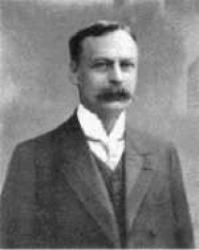
Leonid Dimov
 Romania
- Early Life and Family
- Education and Exclusion
- University Days and Exclusion
- Literary Career
- Poetic Works
- Translations and Legacy
Early Life and Family
Leonid Dimov was born in the southern Bessarabian town of Ismail (then part of Romania) in 1926. His father, Naum Mordhovich, was a caviar exporter, while his mother, Nadezhda Dimova, was a teacher. Despite their Jewish-Bulgarian roots, Russian was the family's spoken language.
Education and Exclusion
In the 1930s, the family moved to Bucharest, where Dimov attended school. However, with the enactment of new anti-Semitic laws, he was expelled on August 31, 1940. Through the connections of his grandparents, Fyodor and Mitrodora Dimov, in Ismail (where he had lived during this period), the boy had his last name changed from Mordhovich to Dimov and was registered as illegitimate. This allowed him to continue his secondary education.
University Days and Exclusion
In 1944, Dimov graduated from "Sfântul Sava" College in Bucharest and enrolled in the Faculty of Philology at the University of Bucharest. He did not complete these studies. He also studied biology for three years at the same university but was expelled for criticizing the teachings of Michurin in a university discussion on Lysenkoism.
Literary Career
Dimov began publishing his work in 1943. He was known for his independent literary stance, which drew persistent attention from the Securitate, the Romanian secret police. In 1964, along with poet Dumitru Țepeneag, he founded the modernist literary movement known as Onirism, based on the literary group "Luceafărul" (associated with the journal of the same name).
Poetic Works
Dimov's poetic collections include:"Versuri" (Verses, 1966)
"7 poeme" (7 Poems, 1968)
"Pe malul Styxului" (On the Shore of the Styx, 1968)
"Carte de vise" (Book of Dreams, 1969)
"Semne cere?ti" (Celestial Signs, 1970)
"Eleusis" (1970)
"Deschideri" (Openings, 1972)
"A.B.C." (1973)
"La cap?t" (At the End, 1974)
"Litanii pentru Horia" (Liturgies for Horia, 1975)
"Dialectica v?rstelor" (The Dialectic of Ages, 1977)
"Tinere?e f?r? b?tr?ne?e" (Youth Without Old Age, 1978)
"Spectacol" (Spectacle, 1979)
"Cele mai frumoase poezii" (The Most Beautiful Poems, 1980)
"Ve?nica re?ntoarcere" (Eternal Return, 1982)
Literary Influence and Recognition
Dimov's work, characterized by its exploration of dreams as an absolute and objective reality, had a significant impact on Romanian literature. In 1997, a volume of foundational texts by Dimov and Țepeneag, titled "Momentul oniric" (The Oneiric Moment), was published in Bucharest. A more comprehensive edition of their theoretical writings, "Onirismul estetic" (Aesthetic Onirism), was released in Bucharest in 2007. Dimov's love letters to his wife, Lucia Salamu, titled "Scrisori de dragoste" (Love Letters, 1943-1954), were published in Iași in 2003.
Translations and Legacy
Dimov also translated works by Marcel Raymond, Curzio Malaparte, Gérard de Nerval, Andrei Bely, and Mikhail Lermontov into Romanian. His daughter from his first marriage, Tatiana Văssiu Dimova (born 1952), is a Romanian biologist and professor at the University of Bucharest.