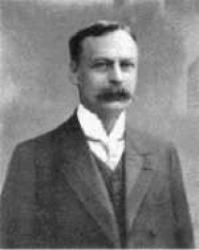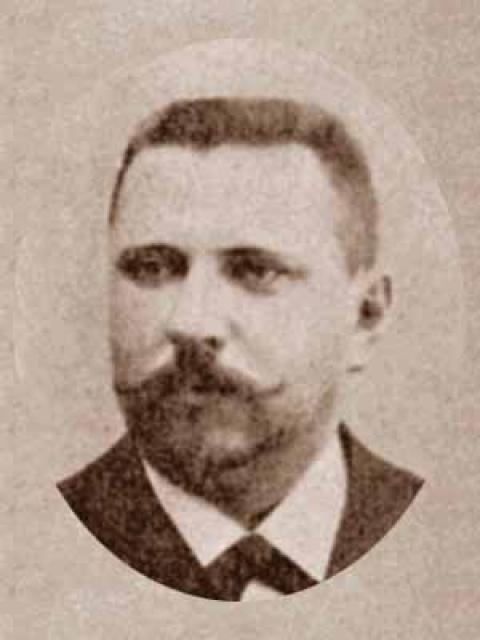
Fedor Didler
 Russia
- Early Life and Education
- University Studies and Literary Pursuits
- Translator and Literary Figure
- Literary Gatherings and Collections
- Literary Museum and Notebooks
- War and Legacy
Early Life and Education
Friedrich (Fyodor) Fidier was born in St. Petersburg to Volga German immigrant parents. From a young age, he exhibited a passion for Russian literature and mastered the language. After completing his education at the St. Petersburg Reformed School, he began translating Russian poetry into German, publishing his first collection in 1878.
University Studies and Literary Pursuits
Fidier enrolled in the history and philology program at the University of St. Petersburg in 1879. During this time, he became acquainted with prominent Russian writers such as V.M. Garshin, S.Ya. Nadson, and Ya.P. Polonsky. He expanded his translations to include plays and prose works, solidifying his reputation as a literary critic.
Translator and Literary Figure
Throughout the 1890s and 1900s, Fidier translated and published anthologies of works by major Russian poets of the 19th century, including Lermontov, A.K. Tolstoy, Pushkin, Nekrasov, and Tyutchev. He also introduced many contemporary authors to German readers, including Nadson, Fofanov, Maikov, and Fet. In addition, he published anthologies dedicated to Russian poets and poetesses, ensuring a comprehensive representation of Russian literature in German.
Literary Gatherings and Collections
Fidier played an active role in the literary circles of St. Petersburg for three decades. He was a regular member of the "Evenings of Sluchevsky" and other literary societies. Fidier founded the literary club "Comradeship Dinners" and organized numerous literary events.
As a collector and chronicler of literary life, Fidier possessed an encyclopedic knowledge of writers across various ranks and literary movements. He respected "popular" poets such as Koltsov and Yesenin and maintained a somewhat skeptical view of modernist trends. Among his close associates were Dmitry Mamin-Sibiryak, Alexander Kuprin, as well as lesser-known writers.
Literary Museum and Notebooks
Fidier's passion for literature extended beyond translation and into preserving its legacy. He established a literary museum in his apartment, housing a vast collection of autographs, photographs, drawings, and other literary artifacts from both Russian and German authors. He also maintained detailed notebooks, titled "From the World of Literati," meticulously documenting his observations of literary figures, their habits, and personal lives.
War and Legacy
With the outbreak of World War I, Fidier's German heritage cast a shadow over his relationships. Despite continued efforts to collect literary materials, his financial concerns led him to revise his will, allowing his daughter to sell the contents of his museum.
Fidier passed away shortly before the February Revolution, and his collection was scattered. Portions of it are now housed in the Institute of Russian Literature (Pushkin House) and other archives, while many documents remain unaccounted for. Fidier's literary legacy lives on through his translations, published memoirs, and the insightful records he left behind in his diaries.