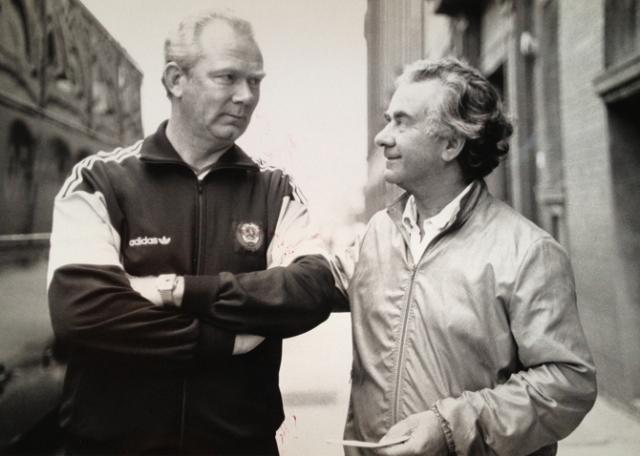
George Skenlan
 Great Britain
- Early Life and Career
- World Cup 1966
- Relationship with the Soviet Team
- Andrey Kanchelskis
- Post-Kanchelskis Career
- Legacy
- Hobbies and Interests
Early Life and Career
George Skenlan was born in Sheffield, England, in the early 20th century. He developed a deep fascination for languages at an early age and studied several at the University of Sheffield. Among them, Russian stood out as his strongest language, and upon graduating in 1962, he was sent to Hong Kong and later Vietnam.
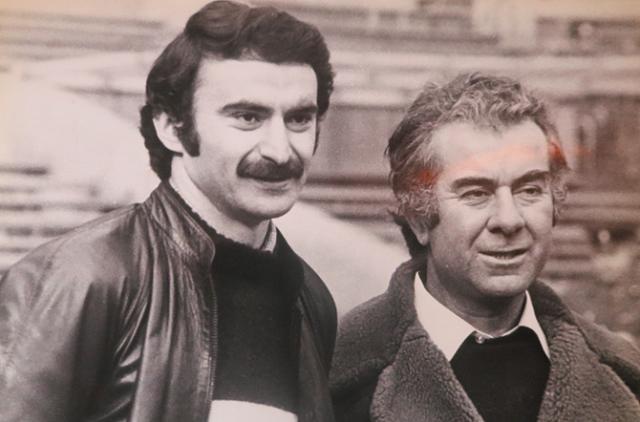
In East Asia, Skenlan honed his Russian skills while holding occasional diplomatic negotiations. Additionally, he indulged his passion for football and even played a full international match for Hong Kong against Yugoslavia.
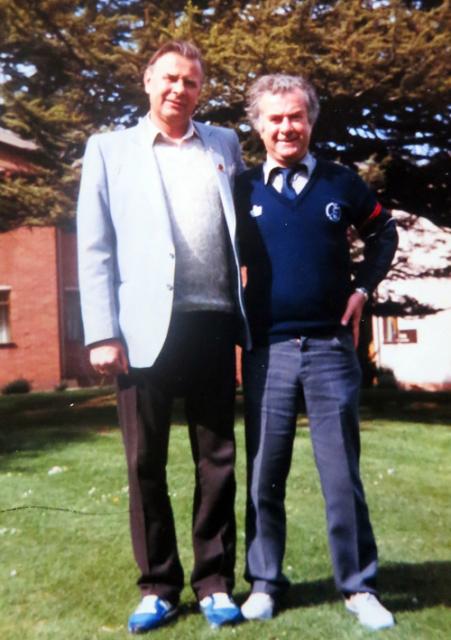
World Cup 1966
Upon his return to England, Skenlan's linguistic abilities became invaluable as the nation prepared for the 1966 FIFA World Cup. The Football Association sought his services as a translator for the participating teams. Skenlan applied for the Russian position, which he believed to be the only application received.
To his surprise, when he met the Soviet team at the airport, he realized he couldn't understand a word they were saying. It turned out that the trio of players he had encountered, H. Khurtsilava, T. Sichinava, and D. Metreveli, were speaking Georgian.
Despite the initial confusion, Skenlan's services were accepted by the Soviet delegation. He also noticed the presence of a "communist" advisor, who closely monitored the team throughout the tournament.
Relationship with the Soviet Team
Skenlan described the Soviet team as disciplined and close-knit. They spent most of their time together, even marching in formation during training sessions. In contrast, the North Korean team was even more insular, but after their victory over Italy, fans flocked to them for autographs.
Skenlan found the Soviet players to be intelligent and emotionally expressive. He felt that their combination of skill and discipline made them exceptional athletes. Unfortunately, public displays of these qualities were discouraged.
Andrey Kanchelskis
In the 1990s, Skenlan played a significant role in the career of another Russian footballer, Andrey Kanchelskis. After a phone call from Alex Ferguson, Manchester United's manager, Skenlan traveled to Crystal Palace to assist the newly acquired Russian player who struggled to communicate in English.
Kanchelskis immediately impressed Ferguson and earned a starting position in the team. Skenlan assisted him not only as a translator but also as a guide to everyday life in England. Skenlan's efforts helped Kanchelskis navigate cultural and linguistic barriers, including driving lessons and medical appointments.
Post-Kanchelskis Career
Following his time with Manchester United, Skenlan continued his involvement with Russian football. He regularly attended UEFA club competitions and international matches in the Soviet Union and Russia. He fondly recalled his encounters with legendary figures such as Tofik Bakhramov and Nodar Akhalakatsi.
Skenlan witnessed the arrival of the first Soviet footballers in Britain, including Sergey Baltacha and Oleg Kuznetsov. He observed their exceptional skills as well as the challenges they faced in adapting to a new culture.
Legacy
Today, in his 80s, George Skenlan continues to demonstrate his unwavering passion for football and the Russian language. He has applied to become the Director of the British Museum's Russian Department, a testament to his lifelong dedication.
Hobbies and Interests
In addition to his football connections, Skenlan enjoys playing golf and remains an avid football player. He is a firm believer in the importance of physical activity and enjoys the social aspect of team sports.


