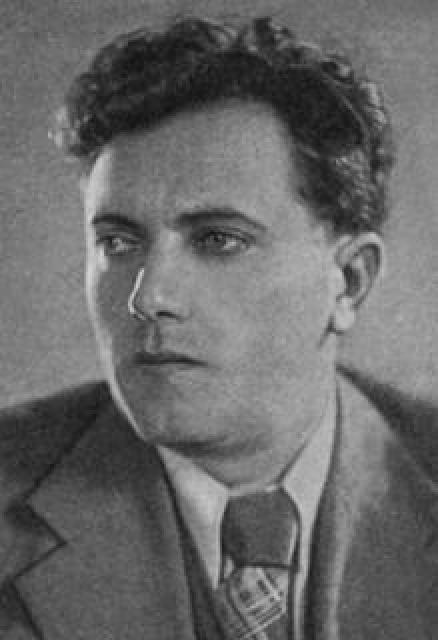
Leonid Varlamov
- Early Life and Career
- Rise to Prominence
- Wartime Filmmaking
- Awards and Recognition
- Postwar Legacy
- Legacy and Honors
Early Life and Career
Roman Karmen, a renowned Soviet documentary filmmaker, was born on July 13, 1907. His filmmaking journey began in 1929 as a film editor at the "Kulturfilm" studio. In 1931, he graduated from the directing department of the State Institute of Cinematography (GIK).
Rise to Prominence
Karmen's directorial career took off in 1935 when he became the director of several newsreels, including "Pioneriya," "Soyuzkinokhronika," and "Novosti Selskogo Khozyaistva." His films showcased his sharp eye for storytelling and his ability to convey the scale and significance of historical events.
Wartime Filmmaking
During World War II, Karmen served as a director of frontline film groups on the Western and 3rd Belorussian fronts. His films captured the victories of the Red Army with a powerful sense of immediacy and a keen understanding of propaganda.
Awards and Recognition
Karmen's contributions were widely recognized. He received five Stalin Prizes (1942, 1943, 1947, 1949, 1951) and the coveted Academy Award from the American Academy of Motion Picture Arts and Sciences in 1943 for "Defeat of the German Armies near Moscow."
Postwar Legacy
Karmen's work continued to inspire after the war. He directed documentaries about international events, such as the struggles in Yugoslavia, Poland, and the Chinese Revolution. He also created films focusing on India, Romania, Burma, and the Volga region.
Legacy and Honors
Roman Karmen passed away on September 3, 1962, leaving behind a remarkable body of work that chronicled some of the most pivotal events of the 20th century. He was buried in the prestigious Novodevichy Cemetery in Moscow.
Karmen's contributions to Soviet and international cinema were honored with the title of Honored Artist of the RSFSR (1950) and the Order of the Patriotic War, Second Degree. His legacy continues to inspire filmmakers and historians alike.




