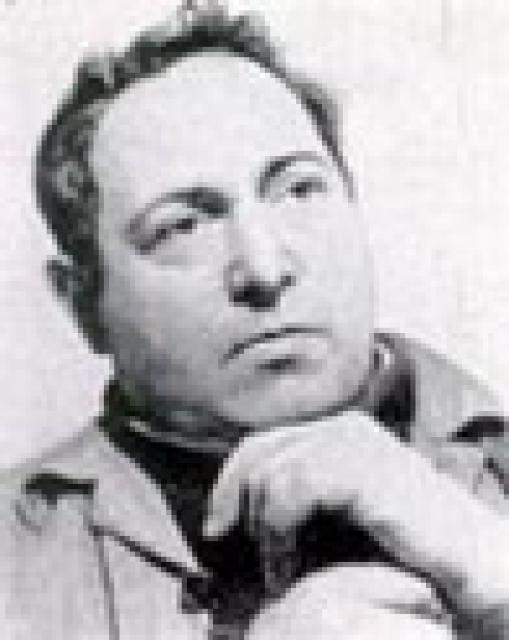
Lev Averbuch
 Moldova
- A Sculptor Shaping Chișinău’s Public Memory
- Training and Early Work
- Monuments and Recognizable Figures
- A Lasting Presence
A Sculptor Shaping Chișinău’s Public Memory
Lev Averbuch was a Moldovan Soviet sculptor whose work helped define the public art of Chișinău. Born in the city on 1 September 1913, he built a practice that moved between portraits, monumental compositions and figures drawn from local life. His best-known works remain part of the city’s cultural landscape.
Training and Early Work
Averbuch studied at the Ivan Repin Art School, graduating in 1948 with a focus on sculpture and portraiture. Among his early works were a bust of a Stakhanovite worker and a portrait of revolutionary Sergei Lazo, both made in 1948. The subjects reflected the Soviet era in which he worked, while also showcasing the careful modeling and attention to character that marked his portrait sculpture.
Monuments and Recognizable Figures
In 1957, Averbuch created bronze busts of the scholar Nicolae Milescu-Spătaru and writer Ion Creangă. Installed on Chișinău’s Alley of Classics, the portraits placed his work in a prominent civic setting and linked it to the city’s commemoration of writers and intellectuals.
He also developed a series of sculptural compositions that became familiar in Moldovan art: “Spring” (1960), “The Shepherd” (1967), and “E. Sîrbu, Daughter of the Forest” (1968). Their subjects ranged from renewal and rural work to a figure rooted in local history. Averbuch’s sculpture “Buciumaș,” dated 1959, is listed in Moldova’s national movable cultural heritage register, which records it as a large, full-length figure in traditional dress playing a bucium, a Romanian-style long wooden horn.
A Lasting Presence
Averbuch’s work bridged intimate portraiture and large-scale public sculpture. The busts on the Alley of Classics connected his art to Chișinău’s literary heritage, while his other compositions gave form to workers, shepherds and cultural figures of Moldova. He died in Chișinău on 4 January 1981, aged 67, leaving a body of work preserved in the city’s monuments and national art collections.


