Lev Balitskiy
 Russia
- Pyotr Aleksandrovich Balytsky
- Academic Activism
- Russian Popular Union
- Educational Contributions
- Arrest and Detention
- Defense and Release
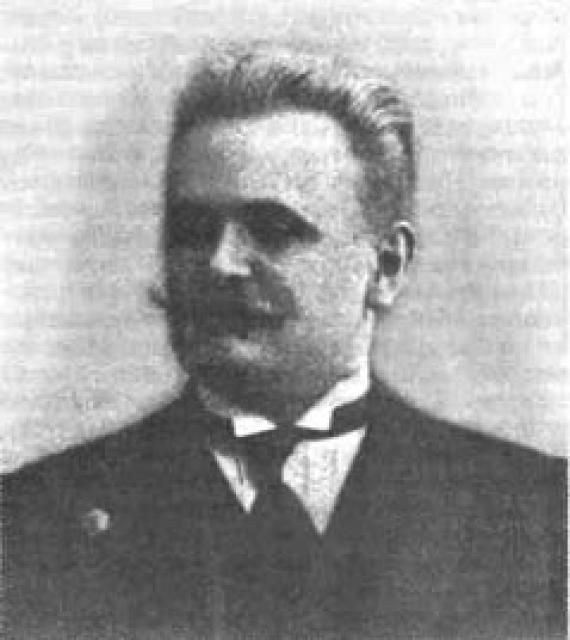
Pyotr Aleksandrovich Balytsky
Early Life and EducationPyotr Aleksandrovich Balytsky was born in the village of Shamraevka, Podolsk Governorate, in the family of a priest. He graduated from the Uman Gymnasium in 1904 with a gold medal and a certificate of "outstanding abilities and diligence" from the gymnasium's pedagogical council. Balytsky pursued two higher educations, earning degrees from the Economic Faculty of the Polytechnic Institute of Emperor Peter the Great in 1909 and the Law Faculty of St. Petersburg University.
Academic Activism
As a Polytechnic student, Balytsky founded and led the Academic Union of the Institute's students. He was elected Chairman of the Academic Club and headed the editorial board of "Bulletin of Student Life." He participated in a deputation of academic student representatives who had an audience with the Tsar.
Russian Popular Union
Balytsky was a prominent member of the Russian Popular Union named after Mikhail Archangel (RNSMA). He served on the editorial board of the "Book of Russian Grief," was elected a candidate member in 1913, and later became a member of the Union's Main Chamber.
Educational Contributions
Balytsky was a renowned educator and organizer of education in St. Petersburg. He taught at the Gymnasium of the Russian Assembly, was a privat-docent at the university, and organized and led various educational courses. He served as director of the Petrograd Higher Commercial and Accounting Courses, founder of courses on rural law and economics, and head of the accounting courses of the All-Russian Labor Union of Christian Sobriety, among other educational institutions.
Arrest and Detention
Balytsky was arrested by the Cheka on June 13, 1918, in connection with the "Secret Organization of the People's Reprisal" case. He was accused of speculation (being a trustee of the Tomsk Steam Sausage Factory) and, more importantly, of drafting the charter of the "Union for the Salvation of the Motherland and Freedom." His brother, the publicist Pyotr Aleksandrovich Balytsky, was also arrested.
Defense and Release
Although the accusations against him were not proven, Balytsky was imprisoned in the Kresty Prison. He adopted an aggressive defense strategy, bombarding various authorities with complaints and appeals. He emphasized that the schools he established worked "for the benefit and strengthening of Soviet power" and that he had "admitted Jews into the number of students without any quota" under the tsarist regime, for which he received a letter of appreciation from a Jewish newspaper in 1917. He also appealed for protection to the German consulate general (as his wife was a former German citizen) and the Ukrainian consulate (claiming Ukrainian ancestry). Despite these efforts, Balytsky was taken hostage in early September and spent nearly three months in prison, expecting to be executed.
On November 21, 1918, the Petrograd Cheka ordered his release "in view of the fact that the need for hostages at the present time has almost passed." Balytsky's subsequent fate remains unknown.