Louis Visconti
 France
- Biography of Louis Visconti
- Education and Early Career
- Architect of the National Library
- Contributions to Architecture
- Later Career and Death
Biography of Louis Visconti
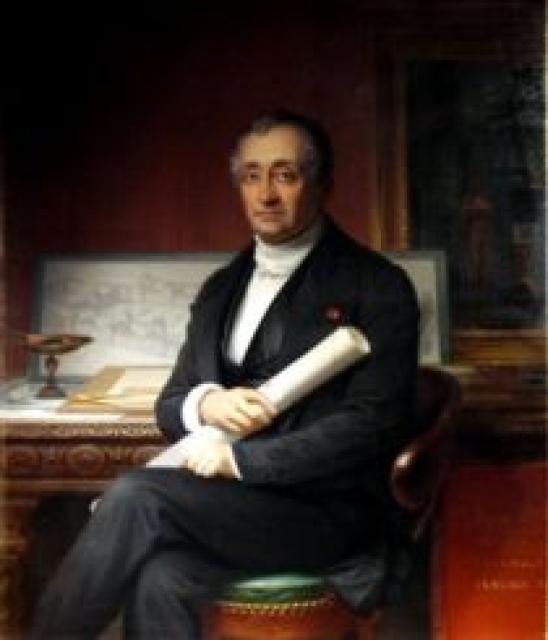
Louis Visconti was a French architect known for his contributions to the field of architecture and his work on various prominent projects. He was born in 1791 and was the grandson of Gianbattista Antonio Visconti, a renowned Italian archaeologist.
Education and Early Career
Visconti's father, also an architect, fled Rome with the young Visconti in 1798. From 1808 to 1817, he studied architecture under the guidance of Charles Percier at the School of Fine Arts in Paris. During this time, he was awarded the second Grand Prix in the architecture category and received a departmental award from the Academy.
Architect of the National Library
In 1825, Visconti was appointed as the architect of the National Library in France. His main responsibility in this role was overseeing restoration work on the public reading room. Visconti earned his reputation as an architect during the initial period, primarily designing residential buildings. However, he also constructed several public fountains in Paris, including the "Gallon" fountain (1824-1828), the "Luve" fountain (1835-1839), and the "Molière" fountain (1841-1843).
Contributions to Architecture
Visconti played a significant role in the revival of picturesque and Gothic styles, as evident in his architectural design of the Château de Lucy (1844), which was built in the style of an English cottage. In 1842, Louis-Philippe ordered the transfer of Napoleon's remains to the veterans' cemetery, and Visconti was commissioned to design the corresponding funerary monument. The result was a grand monument consisting of a red marble sarcophagus standing on a pedestal of green granite.
Later Career and Death
After Napoleon III ascended the throne, Visconti was entrusted with the project of designing a connecting gallery between the old Louvre building and the Tuileries. The project was later executed with significant decorative modifications by architect Hector-Martin Lefuel. Unfortunately, Louis Visconti passed away in 1853 due to a heart attack. He was buried at the Père-Lachaise Cemetery.