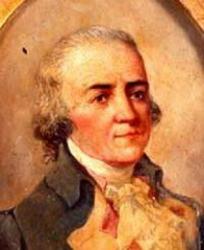
Luca Pacioli
 Italy
Italy- The Birth of Accounting
- Rediscovering Luca Pacioli
- Luca Pacioli's Life and Work
- Publication and Fame
- Collaboration with Leonardo da Vinci
- The Debate over Origins
- The Origins of the Term "Accountant"
The Birth of Accounting
The modern world relies heavily on accounting, and the cornerstone of modern accounting is the double-entry bookkeeping system. This system was first described by the Italian mathematician, Luca Pacioli, in the late 15th century. It was during this period that the term "accountant" was coined.
Rediscovering Luca Pacioli
In 1869, Professor Lucchini, preparing for a lecture on the history of accounting, stumbled upon an old book by Luca Pacioli. One section of the book, titled "Treatise on Accounts and Records," focused on the application of mathematics in commerce. It contained the principles of double-entry bookkeeping, now used in all accounting systems worldwide.
Luca Pacioli's Life and Work
Luca Pacioli was born in 1445 in the Italian town of Borgo San Sepolcro. As a youth, he assisted a local merchant, Folco de Belfolchi, in his business records and studied in the workshop of the artist and mathematician Piero della Francesca. At nineteen, Pacioli moved to Venice, where he became the assistant of the merchant Antonio de Rombiazi.
In his spare time, Pacioli taught de Rombiazi's sons bookkeeping and wrote his first book, a textbook on commercial mathematics, in 1470. After taking the Franciscan vow of poverty in 1472, Pacioli returned to his hometown and began work on the book "Summa de arithmetica, geometria, proportioni et proportionalita." The "Treatise on Accounts and Records" formed a part of this work.
Publication and Fame
On November 10, 1494, with the support of the Venetian praetor Marco di Sanuto, the book was printed by Paganino di Paganini. It quickly brought Pacioli fame. In 1496, he was invited to lecture in Milan, and in 1499, he moved to Bologna, the oldest university in Europe.
Collaboration with Leonardo da Vinci
In Bologna, Pacioli became acquainted with Leonardo da Vinci, who, after reading the "Summa," abandoned his own work on geometry to create illustrations for Pacioli's new book. This work, published in 1508, was titled "De Divina Proportione" and included the author's conversations with Leonardo da Vinci. Pacioli later wrote several other works, including a treatise on chess, which were not published during his lifetime.
The Debate over Origins
By the mid-19th century, Pacioli had been forgotten and was not rediscovered until the find of 1869. However, some researchers doubted the authenticity of his "Treatise on Accounts and Records," while others accused him of plagiarism. The Russian historian Golenishchev-Kutuzov claimed that the first description of double-entry bookkeeping appeared in Benedetto Cotrugli's book "On Trade and the Perfect Merchant," written in 1458 but only published in 1573.
The Origins of the Term "Accountant"
Regardless of the debate over the origins of double-entry bookkeeping, it is clear that Italy is the birthplace of modern accounting. Records of Italian merchants from the early 14th century show evidence of the double-entry principle, with earlier elements appearing in records from the late 13th century. The term "accountant" (literally "bookkeeper") originated in Germany. On February 13, 1498, the Holy Roman Emperor Maximilian I signed a decree appointing Christoph Stecher as the "accountant" of the imperial chamber.