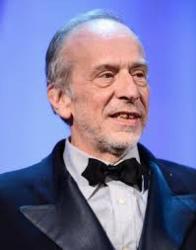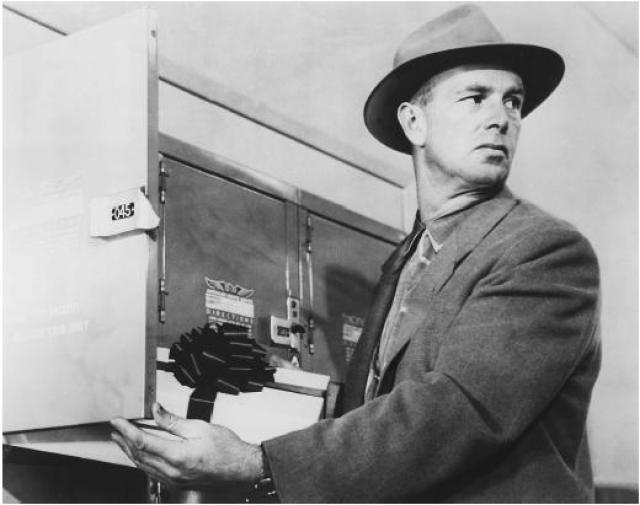
Lucien Ballard
 USA
USA- Lucien Ballard: A Pioneering Cinematographer
- Paramount Studios and the Rise of a Cinematographer
- The King Steps Out and Beyond
- Columbia Pictures and Lexicographer
- Breakthroughs and the 'Obie' Light
- A Master of Color and CinemaScope
- Defining Collaborations with Boetticher and Peckinpah
- Tragedy and Legacy
Lucien Ballard: A Pioneering Cinematographer
Early Life and WanderlustLucien Keith Ballard was born on May 6, 1908, in Miami, Oklahoma. Drawn to adventure, he left academia behind, abandoning studies at both the prestigious University of Pennsylvania and the University of Oklahoma. His travels took him as far as China, but fortune eluded him, and he returned to the United States.
Paramount Studios and the Rise of a Cinematographer
In 1929, Ballard joined Paramount Studios, unknowingly destined for a remarkable career in filmmaking. After a brief stint loading studio trucks, he rose through the ranks as an assistant cameraman. He frequently collaborated with director Josef von Sternberg, who became a significant mentor. Ballard earned his first screen credit on Sternberg's "The Devil is a Woman" (1935), sharing the Venice Film Festival award for Best Cinematography.
The King Steps Out and Beyond
Ballard honed his craft as a lighting designer and editor while working with various Paramount directors, including Victor Milner and Charles Roscher. His official on-screen debut came with Sternberg's "Crime and Punishment" (1935). However, their partnership ended abruptly after a dispute over creative control.
Columbia Pictures and Lexicographer
Ballard moved to Columbia Pictures, where he worked as a cinematographer for five years. In 1940, he joined the eccentric billionaire Howard Hughes, contributing to the controversial Western "The Outlaw" alongside Gregg Toland and director Howard Hawks.
Breakthroughs and the 'Obie' Light
During the filming of "The Lodger" (1944), Ballard met actress Merle Oberon, whom he married in 1945. After Oberon suffered a serious car accident, Ballard devised a camera-mounted lighting fixture that provided direct illumination to her face, minimizing the impact of her facial scarring. This device, known as the 'Obie,' became widely adopted in the film industry.
A Master of Color and CinemaScope
After Hughes, Ballard worked with RKO and 20th Century Fox, where he earned a reputation for excelling in color and CinemaScope. His frequent collaborator was Henry Hathaway, a renowned Western director. Together, they created classics such as "Diplomatic Courier" and "O. Henry's Full House" (1952), "Prince Valiant" (1954), "The Sons of Katie Elder" (1965), "Nevada Smith" (1966), and "True Grit" (1969).
Defining Collaborations with Boetticher and Peckinpah
Ballard's work with directors Budd Boetticher and Sam Peckinpah further cemented his legacy. He became closely associated with Peckinpah's distinctive style, particularly in the iconic Western "The Wild Bunch" (1969).
Tragedy and Legacy
Lucien Ballard's life ended tragically in an automobile accident on October 1, 1988, at the age of 80. He had worked on over 135 films during his 55-year career. His marriage to Margaret McLeallan, which lasted from 1928 to 1944, produced two children.
Ballard's contributions to cinematography were groundbreaking, earning him recognition as a member of the American Society of Cinematographers. His innovative techniques, such as the 'Obie' light, continue to be used by filmmakers today.