Lucien Bonapart
 France
- Biography of Lucien Bonaparte
- Early Life and Education
- Political Career
- Ministerial Appointment and Diplomatic Service
- Personal Life and Later Years
Biography of Lucien Bonaparte
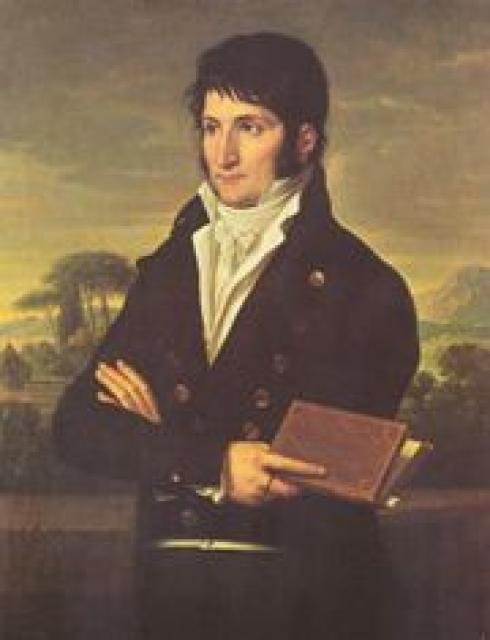
Lucien Bonaparte, the first Prince of Canino from 1814, was a French statesman and the younger brother of Napoleon Bonaparte. He was born in 1775, the third son of Carlo Bonaparte and Letizia Ramolino.
Early Life and Education
From the age of seven, Lucien studied in Autun, France, alongside his older brother Joseph. He later transferred to Brienne, where he reunited with his second brother, Napoleon. Despite his family's military background, Lucien did not wish to pursue a military career and instead decided to dedicate himself to the clergy. He enrolled in a seminary in Ex-en-Provence. However, the French Revolution forced him to return to Ajaccio, Corsica.
Political Career
At the age of fifteen, Lucien became the secretary of Pascal Paoli, a Corsican patriot leader. In 1793, he left Paoli and joined the side of France and the Convention, along with the rest of his family. However, they were exiled from the island and settled in Provence. Lucien used his older brother Joseph's documents, which made him appear older by seven years. In 1794, he married Christine Boyer, the daughter of an innkeeper.
Lucien, like his brothers, faced difficulties after the fall of Robespierre in 1795. He was arrested and imprisoned for six weeks, but thanks to Barras and Napoleon, he was released. He later served as a military commissioner in the Rhine army and then in Corsica. Lucien's association with Napoleon helped him get elected to the Council of Five Hundred from the department of Liamonie. He played a crucial role in the coup d'état of the 18th of Brumaire (9th of November) 1799, which consolidated power in the hands of First Consul Napoleon Bonaparte.
Ministerial Appointment and Diplomatic Service
Lucien was appointed as the Minister of Interior, serving from 1800 to 1801. However, due to his neglectful management and questionable integrity, Napoleon relieved him of his duties and sent him on an honorary exile as an envoy to Spain. In Madrid, he managed to gain the favor of King Charles IV and secured a Franco-Spanish alliance against Portugal. After several unsuccessful diplomatic endeavors, Lucien returned to Paris in 1802 and lived as a wealthy landowner.
Personal Life and Later Years
After the death of his first wife in 1800, leaving him with two daughters, Lucien married Alexandrine de Bleschamp in 1803. They had a son named Charles Lucien in 1803. Napoleon disapproved of this marriage and declared it illegitimate. As a result, Lucien and his wife moved to Rome, where they enjoyed the support of Pope Pius VII. The Pope granted him lands near the town of Canino and proclaimed Lucien as the Prince of Canino.
Napoleon repeatedly offered Lucien the crown, but only on the condition that he annul his marriage. During a personal meeting in Mantua in December 1807, Lucien firmly refused, leading to Napoleon banning him from Rome. In 1810, Lucien attempted to travel to the United States but was captured by the British en route and taken to Malta and then Plymouth. After reconciling with Napoleon, he actively supported his brother's return from the island of Elba. Following the Hundred Days, Lucien, along with all the Bonapartes, was forced to leave France.
Lucien Bonaparte passed away in exile in 1840. In his lifetime, he had nine children from his second marriage. Lucien was not only involved in politics but also pursued literary endeavors. He published a novel, "La Tribu indienne, ou Edouard et Stellina" (The Indian Tribe or Edward and Stellina), in 1799. In 1834, he released two widely circulated works, "La Vérité sur les Cent-Jours" (The Truth about the Hundred Days) and "Mémoires de Lucien Bonaparte, prince de Canino, écrits par lui-même" (Memoirs of Lucien Bonaparte, Prince of Canino, Written by Himself). The latter described his early years. Lucien also wrote poems, including "Charlemagne ou l'Église sauvée" (Charlemagne or the Saved Church) and "La Cyrnéïde ou la Corse sauvée" (The Cyrneïde or the Saved Corsica).