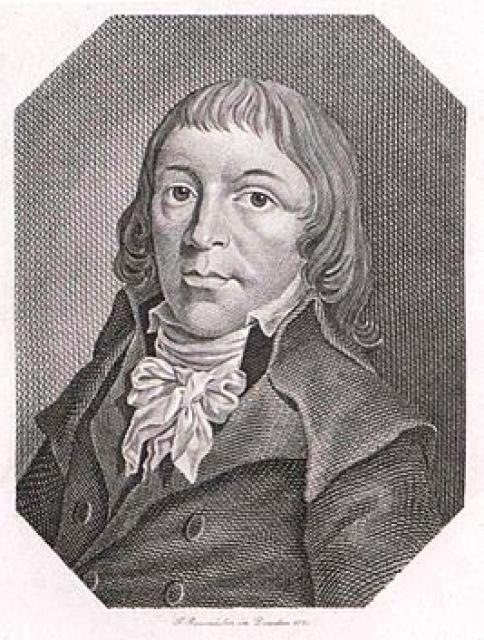
Ludwig Kosegarten
 Germany
- Ludwig Gotthard Kosegarten: A Literary and Scholarly Legacy
- Early Life and Education
- Literary Contributions
- Thematic Influences
- Legacy and Reception
Ludwig Gotthard Kosegarten: A Literary and Scholarly Legacy
Born into a family of scholars, Ludwig Gotthard Kosegarten emerged as a prominent figure in German literature and academia.
Early Life and Education
Kosegarten was born in Grevesmühlen, Germany, and received his education at the University of Greifswald. During his tenure as a professor at Greifswald, he taught both history and theology, establishing himself as a respected academician.
Literary Contributions
Kosegarten's literary career is marked by his experimentation with genres. He penned the poem "Jucunde" in 1808, an imitation of Johann Heinrich Voss's "Luise." His sentimental novel "Ida von Plessen" and other works enjoyed popularity during their time. However, his most enduring contribution is his collection of "Legenden" (2 vols., 1804).
Thematic Influences
Kosegarten's writings often grappled with religious themes and the exploration of human emotions. His idyllic and sentimental approach to literature reflected the prevailing literary trends of his era.
Legacy and Reception
Kosegarten's "Lyrische Dichtungen" (Lyrical Poems), a collection published in 1831-32, showcased the breadth of his literary abilities. After his passing, he was laid to rest in Altenkirchen, near the church where he served as a pastor. Kosegarten's legacy as a poet and scholar continues to resonate within the annals of German literary history.


