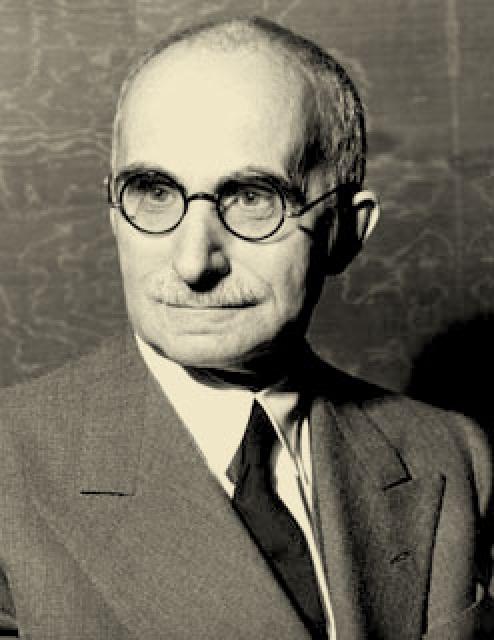
Luigi Einaudi
 Italy
Italy- Early Life and Education
- Academic and Early Political Career
- Journalism and Economic Expertise
- Post-World War II and Presidency
- Other Activities and Legacy
Early Life and Education
Luigi Einaudi was born on March 24, 1874, in the town of Carrù in the Piedmont region of Italy. He received his higher education at the University of Turin, where he embraced socialist ideas and collaborated with "Sociale Critica," a journal edited by Italian Socialist Party leader Filippo Turati.
Academic and Early Political Career
In 1895, Einaudi graduated from university with a degree in law and remained at the university as a lecturer. He also taught at the Polytechnic University of Turin and Bocconi University in Milan. In the early 20th century, Einaudi's political views shifted towards conservatism. In 1919, he was appointed a senator in the Kingdom of Italy.
Journalism and Economic Expertise
Alongside his academic career, Einaudi worked as a journalist for prominent newspapers such as "La Stampa" and "Corriere della Sera." He also served as a financial correspondent for "The Economist." He retired from journalism in 1926 but resumed writing for "Corriere della Sera" after the fall of the fascist regime in 1943.
Post-World War II and Presidency
After the capitulation of the Italian government on September 8, 1943, Einaudi fled to Switzerland, returning to Italy a year later. In the new post-war Italy, he became a member of the Liberal Party and was appointed president of the Bank of Italy, serving from January 5, 1945, to May 11, 1948.
On May 11, 1948, Luigi Einaudi was elected as the second president of the Italian Republic. He served a seven-year term and became a senator for life after its expiration.
Other Activities and Legacy
Throughout his career, Einaudi was involved in various cultural, economic, and educational organizations. He was an advocate for European federalism and personally managed a farm near the town of Dogliani in his native Piedmont, where he implemented progressive agricultural techniques.
Einaudi had two sons: Giulio, a prominent Italian publisher, whose son, Ludovico, became a noted composer, and Mario, a professor at Cornell University and an active anti-fascist. Luigi Einaudi died in Rome in October 1961 at the age of 87.