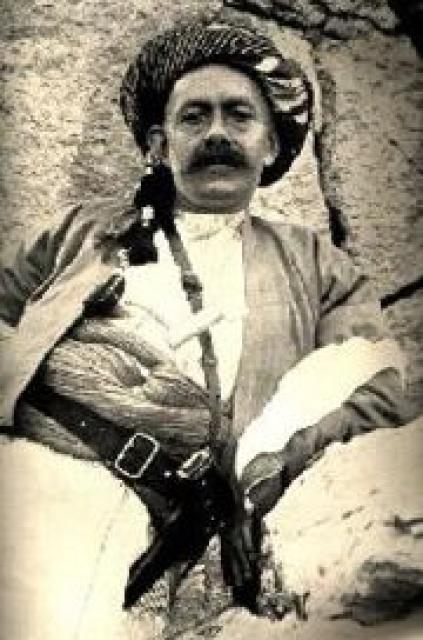
Mahmud Barzandzhi
 Iraq
Iraq- Sheikh Mahmood Barzani: A Figurehead of Kurdish Nationalism
- Ascendance to Leadership
- Alliance with Foreign Powers
- Conflict with the British
- Return to Iraq and Renewed Resistance
- Negotiations with the Turks and the USSR
- Bombardment and Guerrilla Warfare
- Surrender and later Uprisings
- Later Years and Legacy
- Death and Impact
Sheikh Mahmood Barzani: A Figurehead of Kurdish Nationalism
Early Life and HeritageMahmood Barzani, born in 1881 in Sulaymaniyah, Iraq, descended from a lineage of Sufi sheikhs belonging to the Qadiriyya order. His father, Sheikh Saeed, wielded significant influence as the de facto ruler of Sulaymaniyah and enjoyed close ties with the Ottoman Sultan Abdul-Hamid II.
Ascendance to Leadership
Following the murder of Sheikh Saeed by Arab nationalists in 1909, Mahmood Barzani initiated a rebellion to avenge his father. The uprising forced the Ottoman government to grant concessions, bolstering Barzani's authority.
Alliance with Foreign Powers
As the First World War erupted, Barzani established diplomatic contacts with Russia and Britain, seeking support for Kurdish independence under their protection. Following the British occupation of Mosul, Barzani was appointed the governor of Sulaymaniyah in 1918.
Conflict with the British
Despite their initial support, the British' tight control over Barzani's authority led to tensions. In 1919, Barzani declared himself King of Kurdistan, prompting a British counter-offensive. He was captured and sentenced to death, subsequently commuted to exile in India.
Return to Iraq and Renewed Resistance
The threat of Turkish invasion compelled the British to return Barzani to Sulaymaniyah in 1922. He was initially recognized as the president of the region's self-governing council, but his declaration of Kurdish kingship once again alienated the British.
Negotiations with the Turks and the USSR
Suspicious of both the British and the newly formed Iraqi kingdom, Barzani secretly sought support from Turkey and the Soviet Union. In a letter to Lenin, he expressed Kurdish aspirations for liberation and solidarity with the Russian people.
Bombardment and Guerrilla Warfare
Barzani's refusal to comply with British authority resulted in the aerial bombardment of Sulaymaniyah. He retreated to the mountains, launching a five-year guerrilla campaign, repeatedly raiding his former capital.
Surrender and later Uprisings
In 1927, Barzani surrendered under an amnesty. However, the signing of the Anglo-Iraqi Treaty in 1930, which denied Kurdish rights, sparked another uprising. Barzani led the rebellion that was eventually put down with British assistance.
Later Years and Legacy
After his second surrender, Barzani lived in exile until 1941. He made failed attempts to incite further uprisings. He settled in Sulaymaniyah, where he continued to assist Kurdish rebels and his son, Mustafa Barzani, eventually escaped with his knowledge.
Death and Impact
Barzani died in 1956, his funeral becoming a major anti-government demonstration. He is also remembered for his literary contributions as a poet. Barzani's legacy as a prominent figure in Kurdish nationalism remains influential to this day.