Marcel Duchamp
 France
Biography of Marcel Duchamp
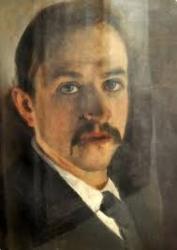
Marcel Duchamp, the French artist, was born on July 28, 1887, near Rouen in Normandy, in a family of artists. He studied at the Academy of Julian in Paris. In 1910-1911, he became interested in physics and mathematics and together with his brothers, the artist Gaston (known as Jacques Villon) and the sculptor Raymond Duchamp-Villon, as well as other young artists, he organized the "Salon of the Golden Section". The aim of this artistic association was to explore ideal proportions and the golden section, as well as the mathematical foundations of art as a whole.
Early Period of Creativity
In the early period of Marcel Duchamp's work, he was influenced by the paintings of Paul Cezanne and Henri Matisse, creating very vivid and bold canvases. In 1912, while experimenting with forms and colors, the artist created one of his most controversial works, "Nude Descending a Staircase", where movement was conveyed through successive intersecting planes. The painting was not accepted at the Salon des Independants in 1912, so Duchamp sent it to the 1913 Armory Show in New York, where one critic sarcastically referred to it as "an explosion in a macaroni factory". Duchamp explained the concept of the painting as "the organization of kinetic elements, the transmission of time and space through an abstract representation of movement". By 1913, when the Armory Show took place, twenty-five-year-old Duchamp felt that he had exhausted the possibilities of easel painting. As a result, he developed the concept of the "ready-made" - a term derived from commercial advertising - which made Marcel Duchamp famous. The idea behind it was that any ordinary object, selected from its environment or group of objects, signed and exhibited by the artist, could be considered a work of art. Duchamp's "ready-mades" - a snow shovel, a hat rack, a bottle rack, and a bicycle wheel - challenged what he considered to be pretentious and empty traditional art. The most monumental of these was a glass construction called "The Bride Stripped Bare by Her Bachelors, Even", also known as "The Large Glass" (1915-1923). This composition, considered one of Duchamp's best works, is a complex and skillfully executed joke: several "bachelors" placed in the lower section are "reaching for" the "bride" displayed at the top. Among Duchamp's most scandalous provocations against public opinion and art in general were the addition of a mustache and beard to reproductions of the Mona Lisa. At the Independent Exhibition in New York in 1917, the artist presented a urinal titled "Fountain". The ironic title bestowed upon this object gave it the status of a "work of art".
Later Years and Legacy
In 1923, Duchamp decided to give up art, declaring that it had fallen under the influence of businessmen and, even worse, had been accepted by the middle class. In the 1920s-1940s, he organized several exhibitions of modern art. His "surrealist exhibitions" in 1942 and 1947, in which spectators were supposed to participate, anticipated not only the happenings of the 1950s and 1960s but also the concept of contemporary art, according to which the viewer plays an equally active role in the creation of the artwork as the artist. With the emergence of pop art in the 1960s, Duchamp's fame grew, and two major retrospective exhibitions were held (1966 - London, Tate Gallery; 1973-1974 - New York, Museum of Modern Art). Perhaps the best expression of Duchamp's ideas can be found in his scattered notes, published in 1934 under the title "The Green Box". Marcel Duchamp passed away on October 1, 1968, in Neuilly-sur-Seine, France.