Oskar Raunam
 Estonia
- Oscar Raunam - Estonian Artist
- Early Life and Education
- Early Works
- War Experience and Revolutionary Themes
- Portrait and Landscape Paintings
- Contributions and Recognition
Oscar Raunam - Estonian Artist
Oscar Raunam was an Estonian artist who played a significant role in the establishment and development of post-war Estonian visual arts. He consistently pursued a path of affirming a realistic vision of the world and experimented with various artistic styles and themes, including historical paintings, portraits, landscapes, graphics, and applied arts. His diverse talent and high level of professionalism can be attributed to his artistic education, which he received from renowned institutions.
Early Life and Education
Born in Päide, Estonia, in 1932, Oscar Raunam completed his high school education before moving to Tallinn. In 1938, he graduated from the Tallinn School of Applied Arts with a diploma in decorative arts. He further honed his skills at the Tallinn Pedagogical School and the Higher Art School. During this time, the art scene in Estonia was vibrant, with the Tartu School of the Society "Pallas" serving as a prominent center for young artists' education. Raunam had the opportunity to learn from renowned painters Roman Niman, August Jansen, and Pet Aren.
Early Works
Even during his studies in 1937, Oscar Raunam received an honorable commission to create six large painted panels for the Baltic countries' pavilion at the World Exhibition in Paris. Although the fate of these works is currently unknown, the artist preserved sketches, with "Forestry" and "Fishing" being his personal favorites. These pieces aimed to capture the solemnity of labor. In "Fishing," a sturdy figure of an old fisherman pulling a spread-out net into his boat stands as the centerpiece, defiantly opposing the force of water. The composition also includes a wide expanse of water with a boat, a seagull soaring in the torn clouds, and a gigantic sail held by a young fisherman. Raunam successfully avoided the decorative and impersonal qualities often found in monumental paintings from that era, establishing himself as an original and national artist. These panels received critical acclaim and earned him the highest award at the exhibition.
War Experience and Revolutionary Themes
When the Great Patriotic War broke out, Raunam willingly joined the front. The harsh experiences of war later found expression in his artwork. In 1948, he created a significant painting that brought him well-deserved recognition - "Estonian Red Guards on the Outskirts of Rakvere in 1918" (State Art Museum of Estonian SSR). This work established Raunam as an exceptional master of thematic historical and revolutionary painting. He skillfully interpreted the heroic struggle for Soviet power. The winter landscape conveys a sense of anxious anticipation, with glimpses of Red Guards preparing for battle in the background. In the foreground, a commander meticulously examines a map, issuing final orders before the attack. The painting captures the moment right before deadly gunfire erupts. The artist returned to revolutionary themes in his 1967 painting "Uprising," featuring a worker carrying a flag. The piece combines elements of a easel painting, a distinct monumentality, and the powerful appeal of a poster.
Portrait and Landscape Paintings
After exploring thematic painting, Raunam delved into genre portraits. Notable examples include "Portrait of Blacksmith Tomper" (1947, Art Fund of Estonian SSR) and "Portrait of an Elderly Woman" (1948). Raunam consistently emphasized the creative and impactful qualities of his subjects. In the painting "Noon. Milking Cows" (1949), everyday collective farm work is interpreted with life-affirming optimism.
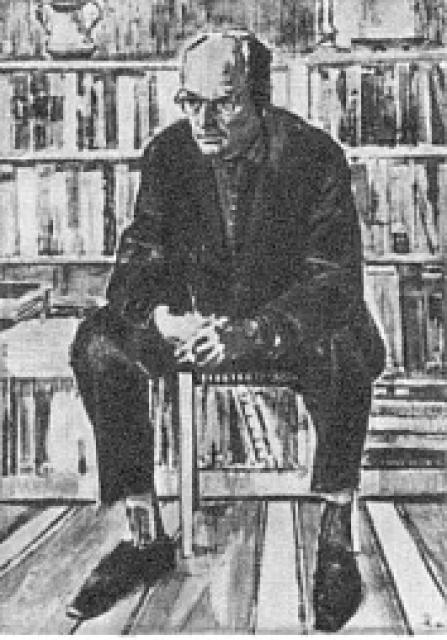
Among the numerous portraits Raunam created, those of figures from Estonian culture hold a significant place. He painted writer L. Remmelgas (1964, State Museum of Estonian SSR), artist Aili Vint (1965), ceramist H. Kuma (1982), and actor Y. Yarvet (1984). Throughout his long artistic career, Oscar Raunam continued to paint landscapes, particularly his beloved old Tallinn. Notable works in this genre include "Haystacks" (1946), "Winter Hay Harvest" (1947), watercolors such as "Waterfall on the Suna River in Karelia" (1959), and "Old Town" (1984). In his later years, the artist frequently turned to still life.
Contributions and Recognition
Apart from his artistic endeavors, Oscar Raunam also engaged in extensive public and teaching work. From 1952 to 1962, he served as the vice-rector of the Art Institute of Estonian SSR. He authored several monographs on watercolor painting techniques and applied graphics. In 1964, Professor Oscar Raunam was awarded the title of Honored Artist of Estonian SSR, in recognition of his significant contributions to the arts.


