Marcel Marceau
 France
- Biography of Marcel Marso - The Silent Poet
- Early Life and Influences
- Challenges and Resistance
- The Birth of Bip
- The Art of Marcel Marso
- Legacy and Farewell
Biography of Marcel Marso - The Silent Poet
Marcel Marso, born Marcel Mangel, was a French mime artist and the creator of the famous Paris Mime School. He devoted nearly 60 years of his life to the stage, earning him numerous accolades and an immense global following. Marso's performances were met with enthusiastic headlines such as "Poet of Silence," "Wizard of Silence," "Speaking the Language of the Heart," "Bravo, Bip!" and "Thank You, Marso!" His audience numbered in the tens of millions, and during the 1960s and 1970s, he toured all continents, giving around 300 performances per year. American sociologists hailed him as the "most popular Frenchman," while the French government recognized him as a "National Treasure" and critics worldwide dubbed him the "Pierrot of the 20th century." However, Marso cannot be simply labeled a "popular actor" or a "star." His artistry went beyond mass culture, and he possessed an extraordinary reverence for life, which resonated with his audiences and evoked genuine love and admiration. He had the ability to awaken in each spectator a sense of personal identity, dignity, and compassion.
Early Life and Influences
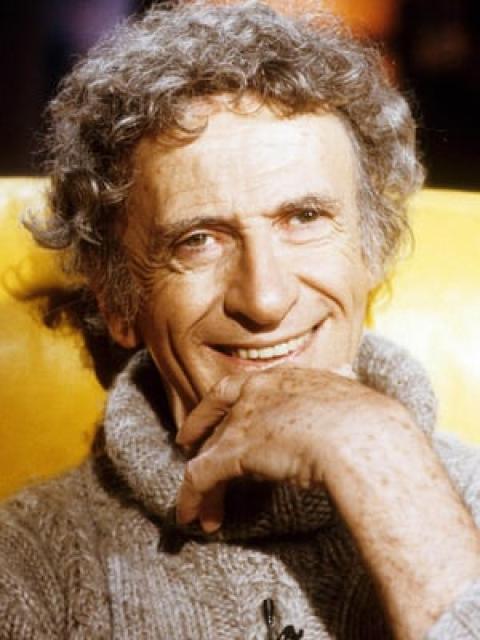
Marcel Mangel, later known as Marcel Marso, was born on March 22, 1923, into a Jewish family of Polish immigrants. His mother, Hanka Werberg, hailed from Ukraine, specifically from Yabluniv in the Ivano-Frankivsk Oblast. When she was eight years old, her family relocated to Alsace, which was under German control at the time. It was there that she met Marcel's father. Marcel himself was born in Strasbourg when the city returned to being French.
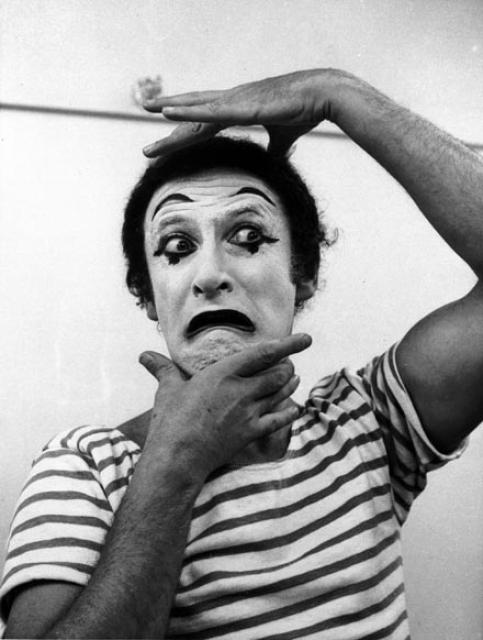
From a young age, Marso saw the art of mime as a way of expressing the deepest and often hidden aspirations of humanity. He believed that words alone could not convey the internal, sometimes unconscious, motivations that guide individuals. In his early twenties, he would wander the streets of Paris at night, reflecting on his childhood and the people he encountered every day, particularly the "street heroes." He sought to create a character through which everyone could recognize themselves. Marso acknowledged that while the traditions of verbal and written theater have endured for centuries, mime had been largely lost. He saw the need to rediscover and reinvent the language of mime.
Challenges and Resistance
Marso faced immense challenges during his youth. When the Nazis occupied Northern France, his father, being Jewish, was executed. However, Marcel and his brother Alain managed to survive and became members of the Resistance. Marcel's stage name, Marso, was adopted during this time, in honor of the revolutionary general Marceau-Desgraviers. While working in an art school, Marcel would draw bread ration cards for those who needed to hide from the fascist regime, including himself. He also worked as a guide, helping transport groups of Jewish children across the Alps to neutral and safe Switzerland.

The Birth of Bip
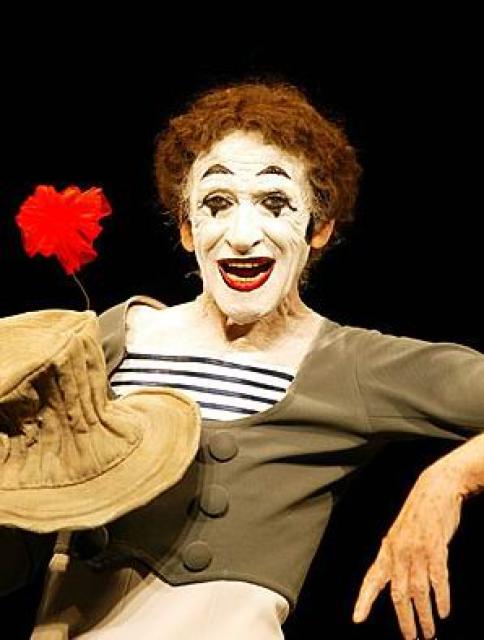
After the war, Marso briefly worked in the theaters of Charles Dullin and Jean-Louis Barrault, but he harbored a dream of creating his own theater. The "Marcel Marso Mime Cooperative" was established during the 1946/47 season. It was during this time that Marso composed his first solo masterpieces: "Bip at a Social Gathering" and the philosophical pantomime "Youth, Maturity, Old Age, Death." In 1947, Marso created the iconic character of Bip, a sad clown dressed in a striped sweater and a worn-out hat. This character brought him worldwide fame.
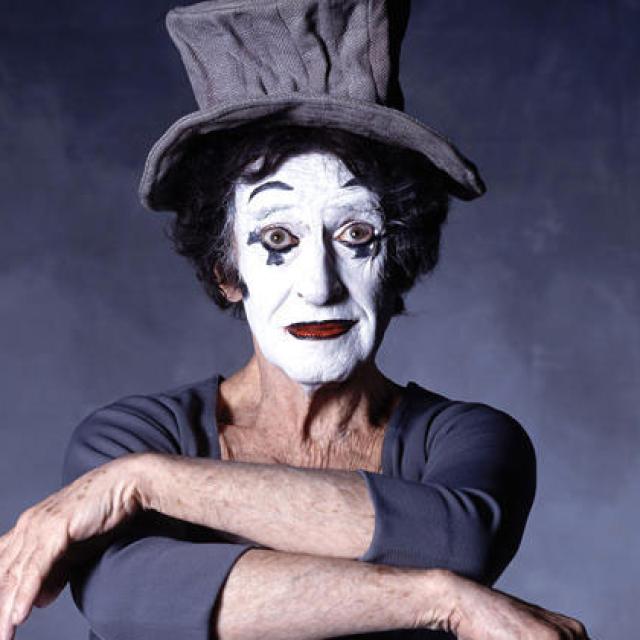
Bip's costume was immediately found, and it remained unchanged throughout Marso's career: a short gray jacket worn over a striped shirt, ill-fitting pants, a battered top hat with a red carnation neatly tucked into it, which swayed on its long stem with every step Bip took. Following the tradition of mime artists, Marso's face was heavily whitened, with a bright red line painted as a mouth, eyebrows raised in surprise, and black streaks under his eyes representing two large "teardrops." The name "Bip" was borrowed from Charles Dickens, whose works Marso adored in his childhood. Pip from Dickens' "Great Expectations" remained his "favorite" character, inspiring Marso to christen his own creation with a slight alteration in the name.
The Art of Marcel Marso
Marso's art was a melodious reflection of the human spirit, allowing people to retain their true selves in a "mad, mad, mad world." His performances presented life in at least two realities: as it is and as it could be if individuals did not lose their inherent humanity. Marso lived a long life, and until his final days, he maintained his exceptional form and actively performed on stage. The audience could not discern any difference between Marso in 1957 and Marso in 2007; it was as if time had no power over the artist and his silent art. Little is known about his personal life, except that he was married twice and had four children: two sons and two daughters.
Legacy and Farewell
Marcel Marso passed away at the age of 85 on September 22, 2007, and was laid to rest in the Pere-Lachaise Cemetery. During the farewell ceremony for the great mime, Mozart's Piano Concerto No. 21 played, a piece that Marso often incorporated into his performances.