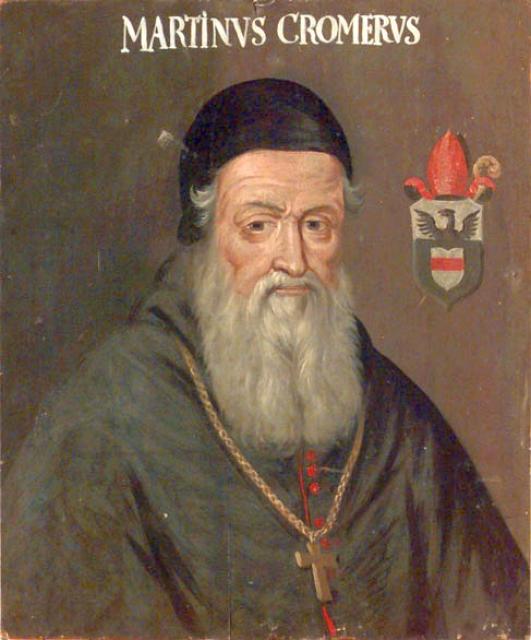
Marcin Kromer
 Poland
- Polish Historian and Churchman
- Early Life and Education
- Church and Diplomacy
- Bishop of Warmia
- Historical Works
- Literary Achievements
Polish Historian and Churchman
Martin Kromer was a renowned Polish historian and churchman who played a significant role in the religious and political landscape of the 16th century.
Early Life and Education
Born in Bytom, Poland, Kromer studied at the Kraków Academy and later worked in the royal chancery. In 1537, he embarked on a journey to Italy where he studied law and earned a doctorate in 1540.
Church and Diplomacy
Upon his return to Poland, Kromer served as secretary to Archbishop Piotr Gamrat and represented him as an envoy in Rome from 1543 to 1544. Throughout his career, he alternated between ecclesiastical and diplomatic roles, including a five-year tenure as Poland's representative to Emperor Ferdinand I (1558-1564).
Bishop of Warmia
In 1579, Kromer was appointed Bishop of Warmia, where he spent the remaining decade of his life. As bishop, he played a pivotal role in strengthening Catholicism in Poland against the growing influence of Protestantism from Germany. He wrote several polemics against Protestant beliefs.
Historical Works
Kromer's historical and geographical writings are considered significant contributions to Polish literature. His "On the Origin and Deeds of the Poles" (1555) is a comprehensive account of Polish history, while "Poland, or On the Situation, Population, Customs, and Government of the Kingdom of Poland" (1577) provides a detailed description of Polish society and politics.
Literary Achievements
Beyond his historical works, Kromer wrote "The True History of the Lamented Adventures of the Finnish Prince Jan and the Polish Princess Katarzyna" (1570). Published anonymously, this work fictionalized the marriage between the future Swedish king Johan III and Katarzyna, daughter of Polish king Sigismund the Old.