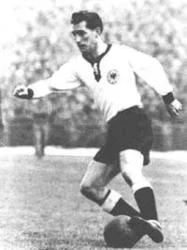
Marcos Carneiro de Mendonca
- From Cataguases to the Football Field
- A Fluminense and Brazil Landmark
- Historian and Collector
- Family and Legacy
Marcos Carneiro de Mendonça (1894–1988) was a Brazilian goalkeeper who helped shape the early history of both Fluminense and the national team. He was Brazil’s first regular national-team goalkeeper, a three-time Rio champion with Fluminense, and a member of the squad that won the country’s first South American football title in 1919. After retiring from the sport, he became a businessman, writer, and respected historian.
From Cataguases to the Football Field
Born in Cataguases, Minas Gerais, on December 25, 1894, Marcos Cláudio Philippe Carneiro de Mendonça was the son of coffee-farming parents. He studied in Rio de Janeiro and entered the Polytechnic School, while also taking part in several sports. Football became his defining pursuit.
He began playing for Haddock Lobo, a Rio club that later merged with América. In 1913, he helped the team win the Carioca championship as goalkeeper. His performances earned him a place on Brazil’s first national teams, and in 1914 he became the first goalkeeper selected for the national side. He remained a regular for nearly nine years.
A Fluminense and Brazil Landmark
Carneiro de Mendonça joined Fluminense, where he played 127 matches and became one of the club’s early stars. He was part of the team that won three consecutive Carioca championships from 1917 to 1919. His imposing presence and composure helped define the role of the goalkeeper in a Brazilian game that was still evolving.
For Brazil, he played in the 1914 Copa Roca victory over Argentina and in the South American Championships of 1919 and 1922. The 1919 title, now recognized as an early Copa América triumph, was Brazil’s first international football championship. Carneiro de Mendonça was in goal as the team made history on home soil.
A serious injury brought his playing career to an end in 1922. He remained closely connected with Fluminense and later served as the club’s president from 1941 to 1943. During World War II, he helped lead a fundraising effort at the club to support the training of the Brazilian Expeditionary Force.
Historian and Collector
Away from football, Carneiro de Mendonça built a career in business and devoted himself to historical research, particularly Brazil in the eighteenth century and the Pombaline period. His books explored figures and institutions important to Brazil’s colonial past, including the Marquis of Pombal and the development of administration and industry.
He assembled an extensive personal research library, including thousands of books and manuscripts, and was active in Brazil’s historical institutions. His papers, correspondence, match records, and scrapbooks are now held in collections at the National Library of Brazil, preserving both his work as a scholar and his record of early football.
Family and Legacy
Carneiro de Mendonça married the poet Anna Amélia de Queiroz, who also shared his enthusiasm for football. They had three children, including the literary scholar and theater critic Bárbara Heliodora. He died in Rio de Janeiro on October 19, 1988.
His legacy reaches beyond the goalmouth. He was a pioneer for Brazil’s national team, a key figure in Fluminense’s early success, and a historian whose papers helped document the country’s sporting and cultural life.