Maria Gulegina
 Russia
- Biography of Maria Gulegina
- Early Life and Education
- Career and Success
- International Recognition
- Personal Life
Biography of Maria Gulegina
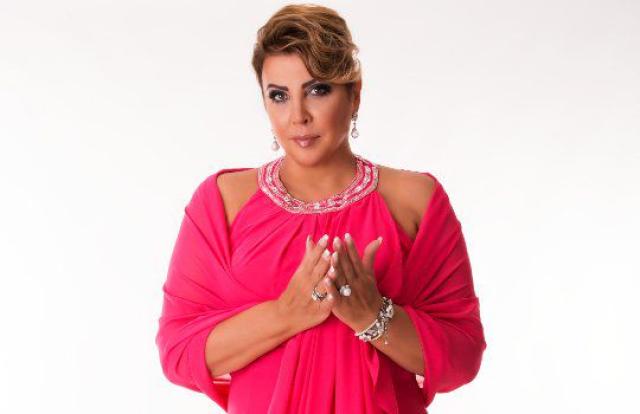
Maria Agasovna Meitardzhan-Gulegina, known as Maria Gulegina, was born on August 9, 1959, in Odessa, in a mixed Armenian-Polish-Ukrainian-Jewish family. Despite her weak and frail condition as a child, Maria began studying ballet at a young age. However, she soon realized her true passion was singing and decided to pursue a career as an opera singer.
Early Life and Education
Maria's parents hoped that her ballet training would strengthen her health and teach her to move gracefully. Although her father initially disapproved of her choice to become a dancer, Maria was determined to become a singer, inspired by her favorite literary character Consuelo. With a strong and low voice, Maria enrolled in the Odessa Conservatory after completing her studies at a music school. Her most influential teacher was E.I. Ivanov, who taught her the traditions of the old Italian school.
Career and Success
After graduating from the conservatory, Maria auditioned for the Bolshoi Theatre in Moscow. Although she was offered a role in "The Legend of the Invisible City of Kitezh," she was informed that her provincial background would limit her opportunities for a larger repertoire. However, a member of the jury, Belarusian singer Svetlana Danylyuk, invited Maria to sing at the Minsk Opera Theatre, where she had the opportunity to work with the renowned conductor Yaroslav Voshchak.
Maria's career flourished at the Minsk Opera Theatre, where she performed roles such as Gilda in "Rigoletto," Rosina in "The Barber of Seville," and Elisabeth in "Don Carlos." In 1985, she won the Grand Prix at the Municipal Theatre in Rio de Janeiro and received an invitation to perform the role of Aida in ten performances. However, the authorities denied her permission to go on tour.
In 1986, Maria participated in the VIII Tchaikovsky International Competition, where she expected to win first place but finished third. The opera house in Minsk also became a challenging environment due to conflicts with her colleagues. Her proposal to perform Italian operas in Italian was met with resistance, and a collective letter to the Central Committee of the Communist Party of Belarus led to restrictions on her repertoire and opportunities.
International Recognition
In 1989, Maria and her husband Mark Gulegin, who was jobless at the time, independently obtained tourist visas and left Belarus to perform "Aida" in the Spanish city of Oviedo. Her arrival attracted the attention of renowned opera houses, and Maria signed one contract after another. She became known for her performances as the Queen of the Night, Manon Lescaut, and Tosca, often being compared to the legendary Maria Callas. Verdi and Puccini operas were particularly close to her heart.
Maria's performances in "The Queen of Spades," "Manon Lescaut," "Tosca," "Nabucco," "Macbeth," and "Andrea Chénier" were recorded and turned into films. She became one of the highest-paid opera divas, with a schedule booked two years in advance. Despite her success, Maria also dedicated herself to charitable and free concerts. She served as a Goodwill Ambassador for UNICEF since 2006 and was a member of the International Paralympic Committee.
Personal Life
Maria's first marriage ended due to her husband's family disapproving of her stage career. She then married Mark Gulegin, a young piano teacher. However, their marriage also ended in 2009. In 2010, Maria married Vyacheslav Mkrtichev, a former European champion in Greco-Roman wrestling and now a coach. She considers herself very happy when all her loved ones, including her two grandchildren, gather together.