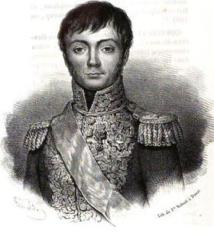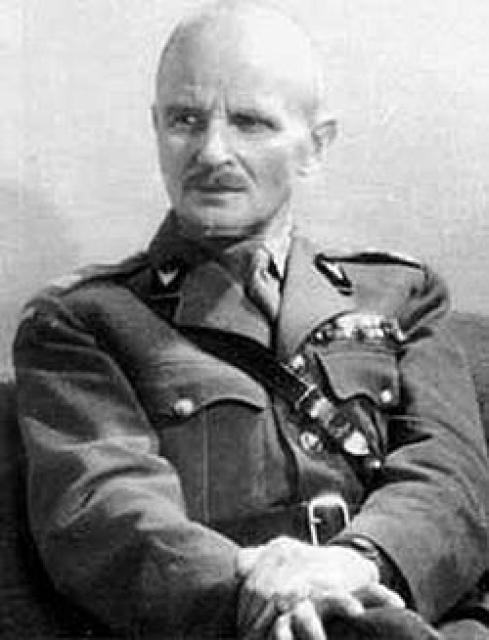
Marian Wlodzimierz Kukiel
 Great Britain
- Marian Kukiel: A Life of Military and Intellectual Achievement
- Military Career
- Academic and Political Pursuits
- World War II and Beyond
Marian Kukiel: A Life of Military and Intellectual Achievement
Early Life and EducationMarian Włodzimierz Kukiel was born on May 15, 1885, in Dąbrowa Tarnowska, Galicia. His father was a veteran of the 1863-1864 Uprising and a respected public figure. From a young age, Kukiel was drawn to revolutionary and liberation activities. He joined the Radiants and the Unforgiven organizations, both active in the struggle for Polish independence.
In 1903, Kukiel enrolled in Lwów University. While there, he continued his involvement in nationalist movements, co-founding the Union for Active Struggle with Władysław Sikorski and Józef Piłsudski. In 1909, he earned his doctorate in philosophy from the same university.
Military Career
With the outbreak of World War I, Kukiel joined the Polish Legions and later the Polish Armed Forces. In 1917, he completed the General Staff Officers' Course and became the first commandant of the School for Cadet Officers in Ostrów Mazowiecka. He served in the Polish-Bolshevik War, commanding the 51st Infantry Regiment and the 24th Infantry Brigade.
After the war, Kukiel was appointed Deputy Chief of the Third Department of the Ministry of Military Affairs, responsible for historical research and operations. In 1923, he became Chief of the Army Historical Bureau of the General Staff, while also attending courses for senior officers at the Higher Military School. He subsequently took command of the 13th Infantry Division in Równe.
Academic and Political Pursuits
In 1925, Kukiel returned to the Army Historical Bureau. However, after the May Coup of 1926, he was dismissed from the army. He then embarked on an academic career at the Jagiellonian University, where he became a professor of military history and earned another doctorate in 1927. In 1930, he became director of the Czartoryski Museum in Kraków.
World War II and Beyond
With the outbreak of World War II, Kukiel volunteered for the army, but was not assigned a position. He participated in the defense of Lwów and subsequently fled to France. There, General Sikorski appointed him Deputy Minister of Military Affairs.
After the Polish Army evacuated to Great Britain, Kukiel commanded the Polish Camps and Units in Scotland, which were later renamed the 1st Polish Corps. In 1942, he became Minister of National Defense, a post he held until 1949. In 1943, he issued a communiqué to the International Red Cross regarding the Katyn Forest massacre, which resulted in a break in relations between the Polish government in exile and the Soviet Union.
Marian Kukiel passed away in London on January 16, 1973. He was awarded the Knight Commander of the Most Honourable Order of the Bath for his exceptional contributions to the British war effort.