Marianne Brandt
 Germany
- Marianne Brandt: A Pioneer of Bauhaus Design
- Industrial Design Career and Professional Success
- Bauhaus Legacy and Design Innovations
- Photography and Photomontage
- Legacy and Impact
Marianne Brandt: A Pioneer of Bauhaus Design
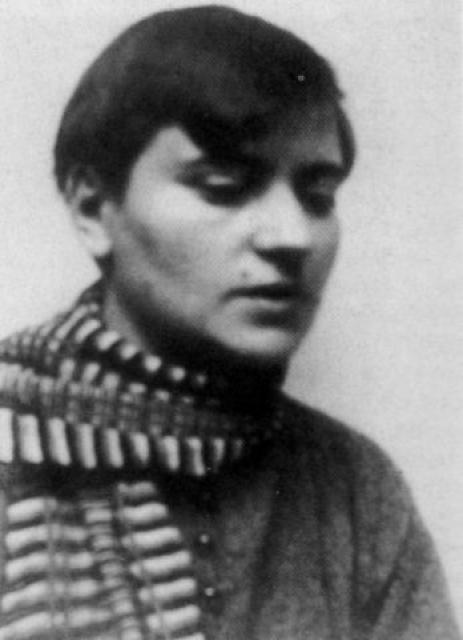
Early Life and Bauhaus EducationMarianne Liebe was born in Chemnitz, Germany, on October 1, 1893. In 1919, she married Norwegian artist Erik Brandt and traveled with him to Norway and France. She pursued a brief art education before becoming a student at the Weimar Bauhaus in 1923.
At the Bauhaus, Brandt studied under László Moholy-Nagy in the metal workshop. She quickly rose to the position of assistant and, in 1928, succeeded Moholy as the workshop's director. During her one-year tenure, she secured several important industrial design contracts for the Bauhaus.
Industrial Design Career and Professional Success
In 1929, Brandt left the Bauhaus and collaborated with Walter Gropius in his Berlin studio. She later headed the metal design department at Ruppel in Gotha, where she remained until the onset of the financial crisis in 1932.
Despite facing challenges during the Nazi era, Brandt never joined the National Socialist Party. She divorced her husband in 1935 after years of separation. She taught design throughout the GDR period and inspired a devoted following of students.
Bauhaus Legacy and Design Innovations
Marianne Brandt's designs for metal ashtrays, lamps, tea and coffee services, and other household objects are considered among the finest of the Bauhaus movement. Several of these designs are still in production today and have become icons of modern industrial design.
Photography and Photomontage
In addition to her industrial design work, Brandt practiced photomontage from 1926 onward. Many of her works remained unknown until the 1970s, as Brandt's residence in East Germany forced her to abandon her Bauhaus aesthetic.
Her photomontages often explored the complex situation of women in the interwar period, portraying both their newfound freedoms and the lingering prejudices they faced. In 2005-2006, a New York exhibition titled "Tempo, Tempo! The Bauhaus Photomontages of Marianne Brandt" showcased her contributions to this medium.
Legacy and Impact
Marianne Brandt died in Kirchberg, Saxony, on June 18, 1983, at the age of 89. Her work as a Bauhaus designer, photographer, and innovator continues to inspire artists and designers today. She remains a pioneer of modernism and a symbol of the Bauhaus's enduring influence on the world of art and design.