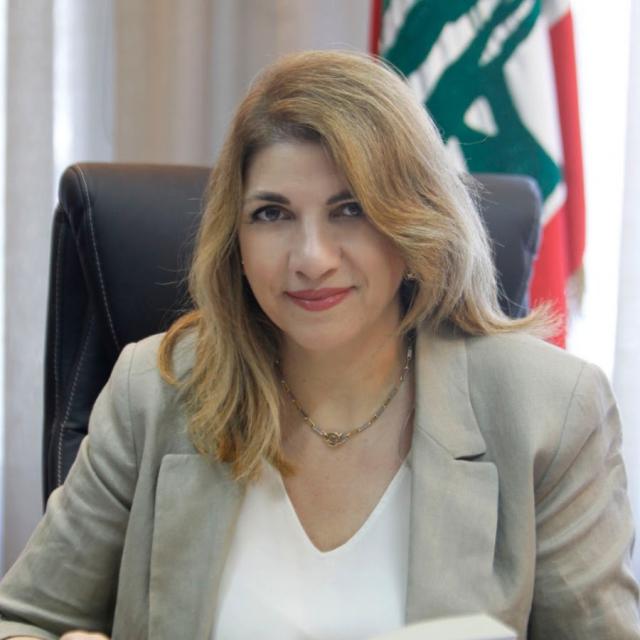
Marie-Claude Najm
 Lebanon
- Marie-Claude Najm: Lebanese Politician and Law Professor
- Early Life and Education
- Academic Career
- Political Activism
- Minister of Justice
- Resignation and Aftermath
- Personal Life
Marie-Claude Najm: Lebanese Politician and Law Professor
Marie-Claude Najm is a prominent Lebanese politician and law professor who has held the position of Minister of Justice in the Hassan Diab government since January 21, 2020. As a Maronite Christian, she made history as one of the few women to hold this high-ranking ministerial post.
Early Life and Education
Najm was born in Beirut on April 6, 1971. She earned a degree in law and political science from the Saint Joseph University in Beirut and later pursued further studies at the University of Panthéon-Assas in Paris. She currently serves as a law professor at Saint Joseph University in Beirut and is also a visiting professor at the University of Panthéon-Assas and the University of Paris 1 Panthéon-Sorbonne.
Academic Career
Najm is the director of the Center for Legal Studies and Research of the Arab World (CEDROMA) at Saint Joseph University in Beirut. She has made significant contributions to the field of law, particularly in the areas of criminal law, human rights law, and international law.
Political Activism
Najm actively participated in the Lebanese protests of 2019, which demanded an overhaul of the political system and an end to corruption. She was subsequently nominated as Minister of Justice by the Free Patriotic Movement, a political party led by Michel Aoun.
Minister of Justice
Najm became Minister of Justice on January 21, 2020. Her tenure has been marked by the Beirut port explosions of August 4, 2020, which devastated the city and led to widespread outrage over the government's negligence.
Resignation and Aftermath
On August 10, 2020, Najm resigned from her position along with several other government ministers, citing the government's failure to address the demands of the protesters and prevent the catastrophic explosions. Her resignation, along with those of the other ministers, ultimately led to the resignation of Prime Minister Hassan Diab and his government. President Michel Aoun accepted the government's resignation, but the government continues to perform its duties in a caretaker capacity.