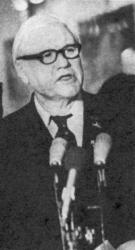
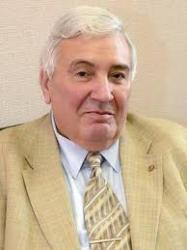
Marsel Dasso
 France
- Marcel Dassault: French Aviation Engineer and Industrialist
- Early Career
- Post-War Career
- The Mirage Legacy
Marcel Dassault: French Aviation Engineer and Industrialist
Marcel Dassault, originally known as Marcel Bloch, was a French aviation engineer and industrialist, famous for his creation of the "Mirage" aircraft series.

Early Career
Born in 1892, Marcel Bloch began his career as an aviation designer in 1915. He developed an innovative aircraft propeller, which he sold the patent for to the Caudron company. Many French planes in World War I were equipped with his propellers, establishing his reputation in the aviation industry.
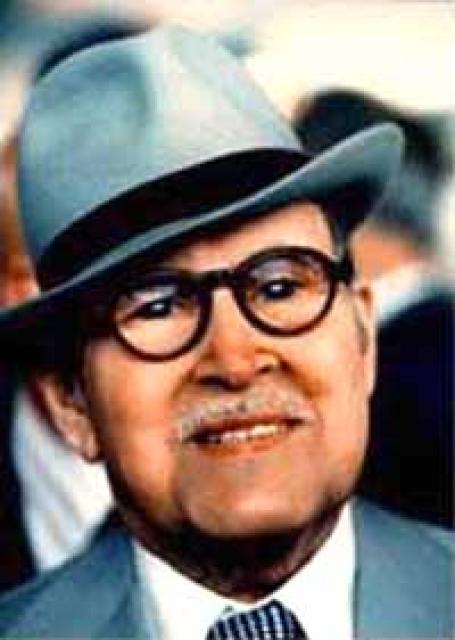
In collaboration with Potez in 1918, Bloch created a two-seat fighter called the SEA-4, and in 1928, he worked with Bleriot to design the MB-60 bomber. In 1930, he founded the Avions Marcel Bloch company, and his first projects included the M.B.60 and M.B.71 mailplanes with high-wing configurations, although neither of them progressed beyond the prototype stage.
In 1932, Bloch developed the M.B.80 aircraft for the French Ministry of Aviation's competition for the best specialized medical aircraft. The success of this project led to a contract for the production of 20 M.B.81 aircraft in 1935. These planes were widely used in Africa and the Middle East.
Post-War Career
In 1945, Marcel Bloch returned to France after being held in the Buchenwald concentration camp during World War II. He took over the General Aeronautique Marcel Dassault company (GAMD), adopting "Dassault" as his underground code name during the French Resistance. Despite facing several health challenges, including multiple eye surgeries that almost left him blinded, Dassault lived for over 84 years and became the largest arms exporter in France.
In record time, Dassault's company developed the twin-engine transport aircraft MD-315 Flamant, which made its first flight in February 1947. Following this success, the company initiated the development of a jet interceptor fighter. The first outcome of this project was the MD.450, which was built in December 1947. The prototype completed its first flight in February 1949, equipped with Rolls-Royce Nene Mk.102 turbojet engines. The French Air Force ordered 450 aircraft for serial production after successful testing. In December 1951, the first serial MD.450 was delivered and given the name Ouragan (Hurricane), serving in the French Air Force until 1961 when it was completely replaced by the MD.454 Mystere IV. The MD-450, exported to India and Israel, marked Dassault's first export success for France. The Ouragan paved the way for the Mystere-Etendard family of aircraft. The Mystere II became the first French aircraft to break the sound barrier, while the Mystere IV helped establish Dassault's reputation when the United States ordered 225 aircraft as part of the NATO agreement. The Etendard IV and its successor, the Super-Etendard, were selected to equip the Foch and Clemenceau aircraft carriers.
The Mirage Legacy
Dassault's Mirage III program, initiated in the 1950s, propelled the company to speeds exceeding Mach 2 and led to the export success of the Mirage fighter aircraft series. The Six-Day War between Israel and Arab countries in 1967 confirmed Dassault's reputation as a manufacturer of high-quality aircraft. The Mirage IV program made significant contributions to France's strategic nuclear program, enabling Dassault to acquire new technologies, particularly in the field of high temperatures. The company's research on vertical takeoff (Mirage III V) and variable-geometry wings (Mirage G) showcased the technical department's ability to find original and efficient solutions. The parallel development of the delta-wing aircraft led to the Mirage F-1, which later entered service with eleven national air forces worldwide.