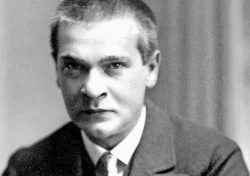
Martial
Martial was a Roman poet whose short, sharply turned verses made him one of antiquity’s keenest observers of everyday life. His epigrams move from jokes about dinner parties, money, books, and social climbing to pointed portraits of vanity, greed, and sexual hypocrisy. The poems often end with a sudden reversal or punchline, but they also preserve a richly detailed picture of the streets, spectacles, and social hierarchies of imperial Rome.
From Hispania to Rome
Marcus Valerius Martialis was born around 38–41 CE in Bilbilis, a Roman town in Hispania Tarraconensis, in what is now Spain. The date is uncertain, though Martial’s poems indicate that he was born in March. Little is known about his childhood or education beyond what can be inferred from his own work. He came from a Roman provincial culture that had already produced prominent writers, including Seneca and Lucan.
Around 64 CE, during Nero’s reign, Martial moved to Rome. In his poems he recalls a city of crowded streets, public baths, clients waiting on patrons, and ambitious writers trying to make their names. He depended on literary patrons and cultivated friendships with influential figures. His verses show the precarious side of that life: he complains about the small or unsuitable gifts he received and jokes about the daily rituals expected of a client. These poems are artfully shaped literary performances, however, and should not be read as transparent diary entries.
The Craft of the Epigram
Martial’s surviving work includes twelve numbered books of “Epigrams,” along with collections usually called the “Book of Spectacles,” “Xenia,” and “Apophoreta.” The “Book of Spectacles” celebrates the games and shows associated with the opening of the Flavian Amphitheatre, later known as the Colosseum, under Emperor Titus in 80 CE. The “Xenia” and “Apophoreta” offer short verses to accompany gifts, especially presents exchanged at the winter festival of Saturnalia.
The epigram was an old Greek and Roman form, but Martial made it a flexible vehicle for humor, satire, and social observation. His poems could praise an emperor or a patron, memorialize a child, mock a bad dinner, or expose the absurdity of an acquaintance. Many are only a few lines long. Their force lies in timing: a poem sets up an expectation and then overturns it in its final words.
Martial’s comedy could be crude, sexually explicit, and deliberately outrageous. He frequently turned his attention to the habits of the Roman elite and the people who aspired to join it. The characters in his poems are often presented as recognizable individuals, but they also function as comic types: the miser, the braggart, the shameless borrower, the poet who plagiarizes, or the dinner guest who eats too much. Modern readers have to reckon with his harsh jokes and the social prejudices of his time, as well as the technical brilliance of his verse.
Success and Patronage
Martial’s first books established him as a popular poet by the 80s CE. He dedicated poems to the Flavian emperors Vespasian, Titus, and Domitian, and he received recognition and material support from patrons. His work offers a vivid account of the systems of gift-giving and literary patronage through which Roman writers sought status and security.
The poems are not simple praise. Martial could celebrate imperial spectacles and flatter rulers while also making comedy out of court life, social ambition, and his own dependence on wealthy benefactors. He wrote for a reading public that included patrons and ordinary book buyers, and he became famous enough to complain about imitators and unauthorized circulation of his work.
Return to Hispania
After roughly 34 years in Rome, Martial returned to Bilbilis in 98 CE. His poems suggest that he missed the energy and variety of the capital, even as he enjoyed the support of friends in his native region. A patroness named Marcella gave him an estate, helping him settle back into provincial life. The younger Pliny later wrote that he had provided Martial with money for his journey home, and, after hearing of the poet’s death, expressed sorrow at the news.
Martial probably died around 101–104 CE in Hispania. The exact date is unknown. His own poems are the main source for his life, while Pliny’s brief notice provides rare confirmation from a contemporary writer.
Legacy
Martial’s epigrams became models for later European writers who wanted to combine brevity, wit, and a pointed ending. His influence can be found in the modern epigram, the satirical one-liner, and the comic verse that captures a whole social type in a few words.
The poems are also an irreplaceable source for the texture of Roman urban life. They reveal how people spoke about status, wealth, food, sex, literature, and the obligations that tied patrons to clients. Martial’s Rome is funny, crowded, and often unkind, but it is also unusually vivid. More than 1,500 poems survive, each offering a compact scene from a city whose inhabitants have been gone for nearly two millennia.