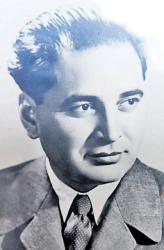
Martti Ahtisaari
 Finland
- Biography of Martti Ahtisaari
- Early Career and Diplomatic Missions
- Political Career and International Mediation
Biography of Martti Ahtisaari
Martti Oiva Kalevi Ahtisaari was born on June 23, 1937 in the Karelian city of Viipuri in Finland (now the Russian city of Vyborg). He began his career in 1965, working alternately in the Ministry of Foreign Affairs of Finland and the United Nations. From 1994 to 2000, Ahtisaari served as the President of Finland. He has acted as an international mediator in various armed conflicts, including those between South Africa and Namibian rebels, NATO and Yugoslavia, the United Kingdom and Irish terrorists, and Indonesia and separatists in Aceh province.
In November 2005, Ahtisaari was appointed as the Special Envoy of the United Nations Secretary-General for Kosovo. In 2008, he was awarded the Nobel Peace Prize for his efforts in resolving international conflicts across multiple continents over the span of three decades.
Early Career and Diplomatic Missions
Ahtisaari began working in the Department for Development Cooperation at the Ministry of Foreign Affairs of Finland in 1965. In 1973, he was appointed as the Ambassador of Finland to Tanzania and concurrently led the Finnish diplomatic mission in Zambia, Somalia, and Mozambique in 1975. In 1977, Ahtisaari assumed the position of the United Nations Commissioner for Namibia.
Returning to Finland in 1984, Ahtisaari held various positions in the Ministry of Foreign Affairs, including Assistant Undersecretary for Development Cooperation and Head of the Department for Development Cooperation. In 1987, he became the Deputy Secretary-General of the United Nations responsible for economic and administrative affairs.
From 1989 to 1990, Ahtisaari led the United Nations Transition Assistance Group (UNTAG) in Namibia, an eight-thousand-strong military and civilian contingent tasked with preparing democratic elections.
Political Career and International Mediation
In 1991, Ahtisaari became the Minister for Foreign Affairs of Finland. From 1992 to 1993, he chaired the working group on Bosnia and Herzegovina at the United Nations International Conference on the Former Yugoslavia in Geneva. He acted as a special consultant and held the position of Special Representative of the United Nations Secretary-General for the Former Yugoslavia.
In 1994, Ahtisaari was elected as the President of Finland. During the war in Yugoslavia in the spring of 1999, he served as one of the peace mediators and proposed a peace plan known as the Agreement on the Principles for a Peaceful Settlement of the Kosovo Crisis, which was accepted by the leadership of Yugoslavia.
After the end of his presidential term in 2000, Ahtisaari founded the Crisis Management Initiative (CMI), a non-governmental organization. In 2000, he was part of the committee of "three wise men" that helped Austria overcome diplomatic isolation within the European Union. Ahtisaari also inspected the armaments warehouses of the Irish Republican Army in 2000-2001.
In 2005, Ahtisaari and CMI facilitated the signing of a peace agreement, ending a thirty-year war between the Indonesian government and the separatist movement in Aceh province. That same year, he was appointed as the United Nations Special Envoy for guiding the process of determining the future status of Kosovo. In 2007, he presented a peace settlement plan for the Kosovo conflict, but it was not adopted by the United Nations Security Council due to the positions of Russia and China.
In October 2008, Ahtisaari was awarded the Nobel Peace Prize for his "efforts on several continents and over more than three decades to resolve international conflicts." He is married and has a son.