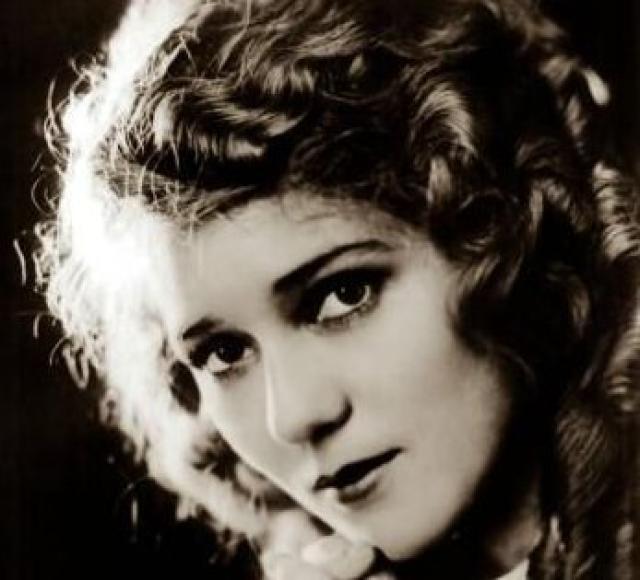
Mary Pickford
 USA
USABiography of Mary Pickford
Mary Pickford, born on April 8, 1892 in Toronto, Canada, was a famous silent film and theater actress. She was also one of the co-founders of the film company United Artists and a legendary figure in silent cinema. She won an Academy Award in 1930 and is known for her roles as mischievous girls and impoverished orphans. However, in the later years of her career, she transitioned into playing more adult roles. She starred in approximately 250 films.

Early Life
Mary Pickford, originally named Gladys Smith, was born to John Charles Smith and Charlotte Hennessey. Her father was the son of Methodist immigrants from Britain and worked as a laborer. He passed away in 1898 from a brain hemorrhage. Her mother, Charlotte, was from an Irish Catholic family and made a living as a seamstress. Mary had a younger brother and sister, Jack and Lottie, who also became actors. In order to please both sides of the family, Gladys was baptized in both the Methodist and Catholic churches and changed her middle name to Marie. After her husband's death, Charlotte started running a boarding house to support the family. On the advice of one of the boarders, Gladys started acting with children at the local Princess Theatre. At the age of seven, she made her stage debut in a play called "The Silver King." The performance was attended by Canadian soldiers who were being sent to South Africa to fight in the Boer War.
Early Career
The Smith family performed in vaudeville and cheap melodramas for six years. In the fall of 1901, they traveled to Buffalo and toured America for five years, working for various theater companies. In 1907, at the age of fifteen, Gladys auditioned for producer David Belasco and landed a minor role in the play "Warren's of Virginia" for a weekly salary of $25. At Belasco's suggestion, she changed her name to the stage name Mary Pickford, and on December 3, she made her Broadway debut. The play was written by William DeMille, the brother of Cecil B. DeMille, who would later become one of Hollywood's most famous directors and also appeared in the play. Mary Pickford's first film role was in the drama "Lonely Villa" (1909), which lasted only 8 minutes. Soon after, she joined the Biograph Studios at the recommendation of director D.W. Griffith. In 1909, she appeared in over 50 films directed by Griffith. This was due to the fact that early film production took very little time, and movies only lasted for one reel, usually about 12 minutes, and were often shot without a screenplay.
Success and United Artists
In January 1910, Griffith moved his company from New York to Los Angeles. Mary Pickford continued to work actively, and although Biograph Studios did not credit its actors at the time, she became known as the girl with the golden curls. In December 1910, she left Griffith and signed a contract with the IMP Company, earning $175 per week. However, the quality of the films she made at IMP disappointed her, and she filed a lawsuit to terminate her contract. After winning the case, she started working for Majestic Film Corp. for an even higher salary of $225 per week. Despite the fact that her husband, actor Owen Moore, was hired as a director by the company, their collaboration did not go well, and in 1912, Mary returned to work with Griffith. By that time, she had become widely known. The press mentioned her name more often and announced upcoming films featuring her. Mary Pickford won the love of the audience because her performances were intimate and heartfelt. She expressed emotions through her eyes rather than dramatic gestures, and newspapers praised her for putting her heart and soul into her performances. In January 1913, she returned to the stage, playing in Belasco's play "A Good Little Devil" (a small role was given to Lillian Gish, another rising star of silent cinema). Belasco agreed to pay Mary $250 per week, which was ten times her salary from six years earlier. Then, producer Alfred Zukor offered her the opportunity to adapt the play into a film. She agreed and signed a contract with his film company Famous Players, thus definitively leaving Griffith. In 1914, seven feature-length films starring Mary Pickford were released, including the melodrama "Tess of the Storm Country." The role of a squatter's daughter became a turning point in her career. From then on, Mary Pickford's films were accompanied by packed theaters, and newspapers advised audiences to arrive early to avoid being crushed in the crowd.
In 1918, Mary Pickford signed a contract with First National to make three films for a fixed fee of $675,000 or approximately $10 million in today's currency. These films, including "Daddy-Long-Legs," "The Hoodlum," and "Heart o' the Hills," were among the highest-grossing films of 1917 and 1918. During this period, Mary Pickford's acting persona solidified, and she became an iconic figure in America. She was known as a divine doll and was idolized by her fans. Her popularity continued to grow, and so did her income. By 1916, she was earning $2,000 per week, plus half of the profits from the films' box office. In 1919, Mary Pickford, Douglas Fairbanks, Charlie Chaplin, and D.W. Griffith founded their own film distribution company called United Artists, which aimed to challenge the dominance of major studios by giving filmmakers more control over their work.
Later Career and Legacy
In the late 1920s, the transition to sound films began, and Mary Pickford could not ignore this new development. In 1929, she acquired the rights to adapt the play "Coquette" into a film. The tragic story of Coquette, a beautiful young woman whose father shoots her lover, was well-received by the audience, and Mary Pickford won her first and only Oscar for her performance. However, critics had mixed reviews about the film. In the early 1930s, Mary Pickford released several more films, but they did not achieve the same success as her earlier work. In 1933, she made her final film, a Western called "Secrets," which also failed at the box office. Afterward, she decided to retire from acting and never appeared in another film.
Despite retiring from acting, Mary Pickford remained an influential figure in the film industry. She was known for her philanthropy and played an active role in various charitable endeavors. During World War I, she toured cities alongside Douglas Fairbanks, Charlie Chaplin, and Marie Dressler, urging citizens to buy war bonds to support the war effort. In one instance, she attracted an audience of around 50,000 people on Wall Street. She was honored for her support of the military and given the honorary rank of Colonel.
Mary Pickford's career spanned the early days of silent cinema and she was instrumental in shaping the film industry. She was not only a talented actress but also a successful producer and businesswoman. Her legacy continues to be celebrated, and she is remembered as one of the most influential figures in the history of cinema.