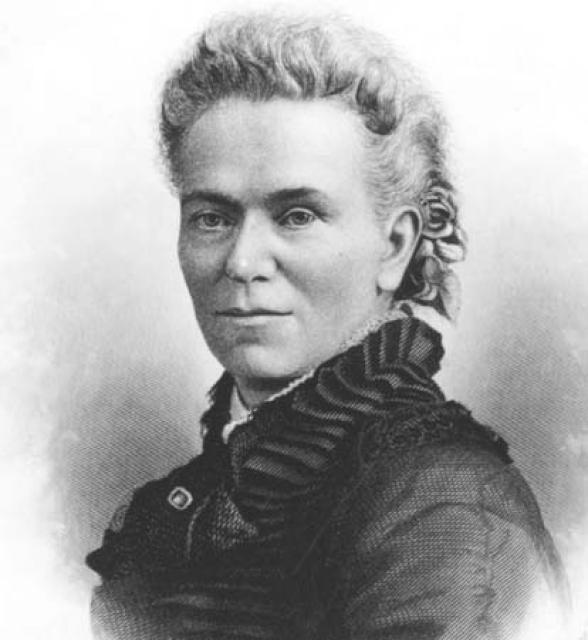
Matilda Joslyn Gage
 USA
USA- Matilda Joslyn Gage: A Pioneer of Social Justice and Equal Rights
- Early Life and Family
- Suffrage Advocacy
- Other Activism and Writing
- Legacy
Matilda Joslyn Gage: A Pioneer of Social Justice and Equal Rights
Matilda Joslyn Gage was an American suffragist, abolitionist, activist, and prolific writer who advocated for the rights of women, Native Americans, and freethinking individuals.
Early Life and Family
Gage was born in Cicero, New York on March 24, 1826. Her childhood home served as a safe house on the Underground Railroad, providing refuge for escaped slaves. She was the daughter of Hezekiah Joslyn, a prominent abolitionist, and became the wife of Henry Hill Gage, with whom she had five children.
Suffrage Advocacy
Gage's dedication to women's suffrage began in 1852 when she spoke at the National Women's Rights Convention. She served as President of the National Woman Suffrage Association from 1875 to 1876 and continued to be actively involved in the organization for decades, serving as Vice President or on the Executive Committee. Gage's radical belief that women had a "natural right" to vote set her apart from contemporaries like Susan B. Anthony and Elizabeth Cady Stanton.
Other Activism and Writing
Beyond suffrage, Gage's activism extended to social reform, separation of church and state, women's bodily autonomy, and the mistreatment of Native Americans. She wrote extensively on these topics, contributing to "The Woman's Bible" and editing the suffrage journal "The National Citizen and Ballot Box." Gage's writings were characterized by their clarity, wit, and astute observations, such as her famous quip: "It sometimes happens that a dead male has more power to name the guardian of his children than the living mother."
Legacy
Despite enduring financial difficulties and health problems, Gage's unwavering advocacy left a lasting impact on social justice movements. Her grave in Fayetteville, New York, bears her epitaph: "There is a sweeter word than Mother, Home, or Heaven; that word is Liberty." Gage's mother-in-law relationship with L. Frank Baum, the author of "The Wizard of Oz," was erroneously depicted as antagonistic in the 1990 film "The Dreamer of Oz." In reality, Baum held Gage in great esteem and regarded her as one of the most intelligent and accomplished women of her time.