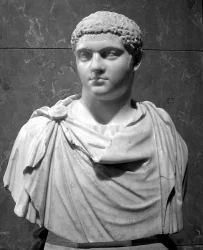
Matthias Corvinus
Matthias Corvinus transformed the Hungarian monarchy into one of the most formidable powers in fifteenth-century Central Europe. Elected king as a teenager, he built a professional army, fought the Ottomans and his Christian rivals, and made his court at Buda a leading center of Renaissance culture. His rule strengthened the crown, but its military ambitions depended on heavy taxation and personal authority.
A King Chosen in Crisis
Born Matthias Hunyadi on 23 February 1443 in Kolozsvár, in the Kingdom of Hungary, he was the younger son of the military commander John Hunyadi and Erzsébet Szilágyi. His father’s victories against the Ottoman Empire had made the Hunyadi family influential, but Matthias’s path to the throne was far from secure. After the death of King Ladislaus V, Matthias was elected king by the Hungarian nobility in 1458, at about fifteen years old.
His election took place while he was held in Prague by the Bohemian king George of Poděbrady. Matthias returned to Hungary after political negotiations and gradually consolidated his rule. He worked to limit the power of competing magnates and strengthen royal administration, relying on officials whose careers depended on the crown.
War and the Black Army
Matthias developed a standing mercenary force known as the Black Army. Its troops, including Bohemian and other foreign soldiers, gave him military capacity independent of the nobility’s traditional levies. He used the force in campaigns against Ottoman incursions, in wars with Bohemia and Poland, and in a long struggle with the Habsburg emperor Frederick III.
Matthias was crowned king of Bohemia in 1469 by opponents of George of Poděbrady, though his authority was strongest in Moravia, Silesia, and Lusatia. His western campaigns later brought him control of Vienna in 1485. The victories expanded Hungarian influence, but maintaining the army required taxes that could be unpopular and strained the kingdom’s resources.
A Renaissance Court
Buda became an important center of humanist learning under Matthias. He brought scholars, artists, and diplomats to his court and married Beatrice of Naples in 1476, strengthening cultural and political ties with Italy. His famed Bibliotheca Corviniana gathered manuscripts on classical literature, history, philosophy, theology, law, science, and other fields. Though the collection was dispersed after his death, surviving volumes remain evidence of the court’s intellectual ambition.
The king’s support for humanist culture was part of a broader effort to present Hungary as a powerful, sophisticated monarchy. Chroniclers and court writers celebrated his achievements, while his own image as a just and energetic ruler became a lasting part of Hungarian memory.
Succession and Legacy
Matthias had no legitimate son. His illegitimate son, János Corvinus, was considered as a possible successor, but the nobility ultimately backed Vladislaus II of the Jagiellonian dynasty. Matthias died suddenly in Vienna on 6 April 1490, and the Black Army was soon disbanded.
His reign left a mixed legacy. Matthias extended royal authority, defended Hungary’s position in a dangerous region, and established a court of remarkable cultural influence. Yet his conquests and centralized rule depended on extraordinary resources and his own force of personality. After his death, the political structure he had built proved difficult to sustain.