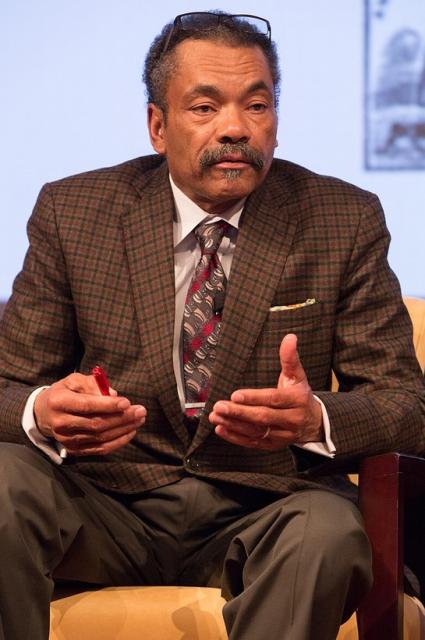
Maurice Jackson
 USA
Maurice Jackson is an American historian, professor, and longtime community organizer whose scholarship brings the stories of Black Washington into view. His route to Georgetown University ran through shipyards, construction sites, labor organizing, and local politics, giving his work a distinctive connection to the people and neighborhoods he studies.
Early life and education
Born in Virginia on October 10, 1950, Jackson spent years working in manual trades before returning to higher education. He was a shipyard rigger, longshoreman, construction worker, and house painter, while also organizing around human rights and community concerns. His experience in activism and working life later informed both his teaching and his historical research.
Jackson earned a bachelor’s degree in political economy from Antioch College, followed by a master’s degree and doctorate in history from Georgetown University. He settled in Washington, D.C., where his interests in the city’s Black communities, political movements, and cultural life became central to his academic career.
Scholarship and teaching
At Georgetown, Jackson teaches history and Black studies and is affiliated with the university’s music program, where he focuses on jazz. His courses range across African American history, the Atlantic world, civil rights, Washington history, music, and the history of political protest.
His first major book, Let This Voice Be Heard: Anthony Benezet, Father of Atlantic Abolitionism, examined the Quaker abolitionist and the wider movement against slavery. Jackson has also written about the Haitian Revolution and co-edited books on abolitionism and Washington jazz. In Rhythms of Resistance and Resilience: How Black Washingtonians Used Music and Sports in the Fight for Equality, he traces how music and athletics helped Black residents challenge segregation and build community.
A recurring theme in his work is that history is made through everyday cultural life as well as through famous leaders and formal campaigns. Jackson has explored how jazz, sports, neighborhood institutions, and community activism helped shape Black identity and the struggle for equality in the nation’s capital.
Public service and activism
Jackson’s career has long connected scholarship with public engagement. He held leadership roles in Washington’s community and political movements, including campaigns for local office. In 2013, he became the first chair of the District of Columbia Commission on African American Affairs, serving through 2016. The commission advised city leaders on issues affecting African American residents. He also served as a special adviser on D.C. affairs to Georgetown’s president and presented a report on Black employment, population, and housing trends to city officials in 2017.
Preserving historical records has been another part of his public work. Jackson donated a large collection of movement pamphlets and archival material on Washington’s 1919 and 1968 riots to Georgetown, and gave Black pamphlets to the Smithsonian’s National Museum of African American History and Culture. He also donated a collection of Cuban jazz records to the University of the District of Columbia’s Felix Grant Jazz Archives.
Legacy
Inducted into the Washington, D.C. Hall of Fame in 2009, Jackson has continued to investigate how the city’s past connects with its present, including the pressures of displacement and the fight for housing, education, and opportunity. His scholarship treats Black Washington as an essential part of American history and links archival research to the voices and cultural traditions of the city’s residents.