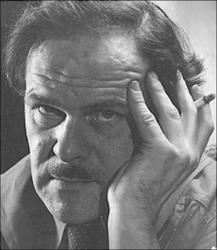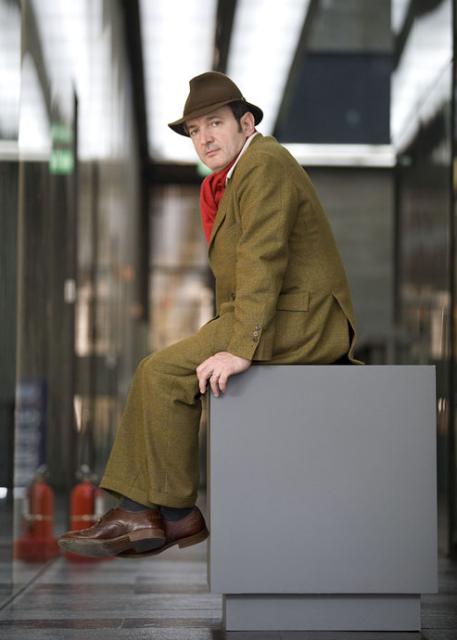
Mauro Korda
 France
- Mauro Corda: Sculptor of the Human Form
- An Unconventional Journey
- Art and Commerce
- The Joy of Creation
- The Artist's Genesis
- The Decline of Technical Skills
- The Dichotomy of Conceptual and Technical Art
- Art as a Lifeline
- The Future of Art
- The Perils of Commercialization
- The Masses and Art
- The School of Open Eyes
Mauro Corda: Sculptor of the Human Form
Mauro Corda, a French sculptor, is renowned for his intricate sculptures that capture the essence of the human body. Utilizing various materials such as bronze, marble, stained glass, wax, plastic, aluminum, and more, Corda's works explore the profound connection between inner form and outer appearance.
An Unconventional Journey
Corda's voice is as soothing as the rhythmic clatter of a train when he speaks, but when he delves into topics that intrigue him, a staccato torrent erupts. His emphatic views on art and its commercialization, contemporary art, and artistic education are particularly passionate. Regarding the latter, Corda strongly advocates for a rigorous classical education as a cornerstone for aspiring artists and sculptors.
Art and Commerce
Corda believes that financial resources are essential for his work. "Without materials, there is no art," he asserts. Despite his success, he remains humble, recognizing that his reputation and the support of decorators and art dealers promote his work effectively. However, he finds genuine satisfaction when his sculptures resonate with individuals who appreciate the craftsmanship and intention behind each piece.
The Joy of Creation
Whether it's a small-scale sculpture for a private collection or a monumental urban installation, the creative process itself brings Corda immense fulfillment. His heart finds solace in realizing his artistic vision, regardless of its scale or context.
The Artist's Genesis
Corda's artistic journey began at birth. "I was born like this," he declares. "I couldn't be anything else." While acknowledging that schools and colleges can facilitate artistic development, he believes that dedicated practice ultimately defines an artist.
The Decline of Technical Skills
Corda emphasizes the importance of technical proficiency in art. He is alarmed by the erosion of traditional craftsmanship in contemporary art education, which he blames for a decline in artistic standards. "In the past, painting analysis followed a system similar to music criticism," he explains. "Today, that analysis is lacking."
The Dichotomy of Conceptual and Technical Art
Corda advocates for a balance between conceptualism and technical skill. "Conceptual art is intriguing, but without technique, it may fail to convey the artist's intent effectively," he says. "You need a foundation to build a house, and when technique is forgotten, art will die."
Art as a Lifeline
Despite the challenges facing art, Corda remains unwavering in his belief in its importance. "When humanity loses its ability to express itself through art, it loses part of its essence," he says. "Most people are obsessed with money, but art will outlive our obsession."
The Future of Art
Corda acknowledges the evolution of art forms, but cautions against abandoning the fundamentals. "We don't know where art is headed," he says. "Impressionism was once considered non-art, so we must remain open-minded without destroying the foundations."
The Perils of Commercialization
Corda warns against conflating artistic value with monetary worth. "People assume that what's expensive is art, but that's not true," he says. "It's fascinating that despite 30,000 years of human art, the skill has been almost lost in the past century. I believe that losing the ability to express ourselves through art will extinguish a fundamental part of humanity."
The Masses and Art
Corda observes the paradox of dwindling interest in art alongside the popularity of large-scale exhibitions. "People flock to exhibitions not because they love art but because it's the thing to do," he says. "It's part of the collective unconscious, a way for people to feel cultured and sophisticated."
The School of Open Eyes
Corda is currently in the process of establishing an art school where he aims to foster genuine artistic development. "We will nurture our students' ability to observe the world with open eyes," he says, instilling in them the values that will empower them to create meaningful and enduring works of art.