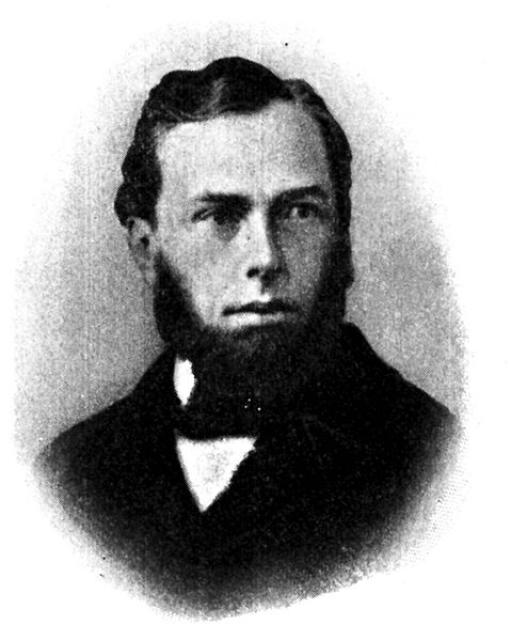
Max Schultze
 Germany
- Max Schultze: A Luminary in Zoology and Histology
- Early Life and Education
- Academic Appointments
- Zoological Discoveries
- Contributions to Histology
- Founding of Medical Journal
- Legacy
Max Schultze: A Luminary in Zoology and Histology
Max Schultze (1825-1874), a renowned German zoologist, anatomist, and histologist, made significant contributions to his fields of study.
Early Life and Education
Born in 1825 to renowned anatomist Karl Schultze, Max pursued higher education in medicine, anatomy, comparative anatomy, and chemistry at the universities of Greifswald and Berlin from 1845 to 1849. He received his doctorate in medicine in 1849.
Academic Appointments
In 1850, Schultze became a prosector at the Anatomical Institute in Greifswald, where he lectured on medicine and researched marine fauna. His work on cilia-bearing worms earned him an honorary doctorate from the University of Rostock.
In 1854, Schultze was appointed extraordinary professor of anatomy at the University of Halle. He later moved to the University of Bonn in 1859, where he established an exemplary anatomical institute.
Zoological Discoveries
Schultze played a pivotal role in zoology, studying the organization of the Rhizopoda polythalamia. His observations on the unique movements of sarcodes and his theory that the cell membrane is not an essential component of the cell laid the foundation for advances in cell biology.
Contributions to Histology
In histology, Schultze made groundbreaking discoveries, particularly in the sensory organs. He and physiologist Ernst Brücke clarified the nature of animal cells, particularly muscle cells. They also established the concept of intercellular substance as a product of embryonic cells' secretion and elaborated on the development of muscular and fibrous connective tissues.
Founding of Medical Journal
In 1865, Schultze founded the renowned medical journal "Archiv für mikroskopische Anatomie," which he edited until his passing. This publication became influential in the field.
Legacy
Max Schultze's contributions to anatomy, zoology, and histology continue to be recognized and inspire scientists today. His work on cilia, cells, and sensory organs laid the groundwork for later developments in these fields.




