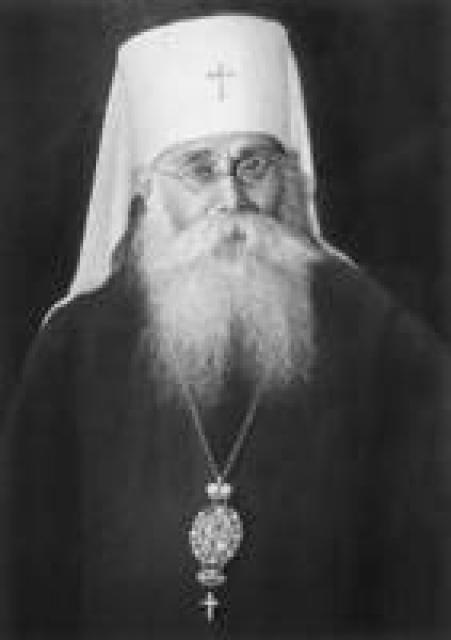
Metropolit Augustin
 Latvia
- Early Life and Education
- Ordination and Early Ministry
- Service in the Dvina Fortress and Jelgava Theological Seminary
- Elevation to the Metropolitanate
- Return to Moscow Patriarchate and Retirement
- Establishment of an Independent Ecclesiastical Structure
- Evacuation to Germany and Final Years
- Posthumous Reburial
Early Life and Education
Metropolitan Alexander (born Aleksandr Petrovich Nemolovsky) was born on February 17, 1873, into a Latvian peasant family in the village of Leiaspipiri in Kekava Parish. He completed his studies at the Riga Spiritual Seminary in 1895, graduating with second-class honors.
Ordination and Early Ministry
Following his ordination to the diaconate in 1904 and to the priesthood in the same year, Alexander served as a psalm-reader and teacher in Sēnča, Kaplava, and Liepāja. During World War I, he served as a military chaplain.
Service in the Dvina Fortress and Jelgava Theological Seminary
In 1926, Alexander became the garrison chaplain of the Daugavpils (Dvina) Fortress. In 1934, he was appointed rector of the Jelgava Theological Seminary.
Elevation to the Metropolitanate
On March 29, 1936, Alexander was consecrated as Bishop of Riga and all of Latvia, with the title "Riga and All of Latvia." The consecration was performed under the jurisdiction of the Ecumenical Patriarchate of Constantinople.
Return to Moscow Patriarchate and Retirement
On March 30, 1941, Alexander returned to the jurisdiction of the Moscow Patriarchate. By the summer of 1941, he was retired from active duty.
Establishment of an Independent Ecclesiastical Structure
During World War II, Alexander separated from Metropolitan Sergius (Voskresensky), the Exarch of Latvia, and formed his own ecclesiastical structure. However, only a few Orthodox parishes in central Latvia, primarily in his native Vidzeme, joined his organization.
Evacuation to Germany and Final Years
In 1944, Alexander evacuated from Riga to Germany, where he suffered from several illnesses. In 1946, he joined the Russian Orthodox Church Outside Russia. He passed away on October 4, 1955, in Gauting, a suburb of Munich.
Posthumous Reburial
On August 10, 2011, Alexander's remains were reburied in the cemetery in Kose, next to his parents. This fulfilled his wish to be interred on Latvian soil after the restoration of Latvia's independence.


