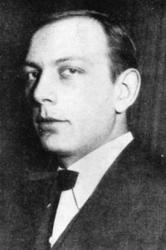
Michael Ancher
 Denmark
Biography of Mikael Anker
Mikael Anker was a famous Danish artist and a representative of Danish Impressionism. He was also one of the founders of the artists' colony in Skagen. Anker was born in the village of Rutsker on the island of Bornholm, Denmark. His father, Jan Mikael Anker, was a trading agent, and his mother was Ellen Elisabeth Munk.
Anker studied at the Royal Danish Academy of Fine Arts in Copenhagen from 1871 to 1875, where he trained in the workshop of P.S. Krøyer. He made his debut as an artist in 1874 and immediately traveled to Paris to continue his studies under Puvis de Chavannes. In 1874, Anker arrived in Skagen and joined the emerging artists' colony there.
In 1880, he married Anne Brønnum, a native of Skagen and an aspiring artist herself. Anker is known for his paintings of local fishermen and portraits. One of the main themes in his work was the struggle of man against the elements. Many of Anker's works depict dramatic and dangerous episodes from the lives of Jutlandic fishermen. His paintings are realistic descriptions of reality, yet they also have a monumental quality based on themes of heroism.
In his large-format and multi-figure paintings, Anker combines classical compositional principles with realism. Some of his most famous paintings dedicated to the theme of fishing include "Will He Clear the Point?" (1880), "The Lifeboat is Carried Through the Dunes" (1883), "Four Fishermen by a Boat on the Shore in Skagen" (1890), "A Summer Day at Sea" (1894), and "Fishermen on the Shore in Skagen. The Catch is Divided" (c. 1875).
Anker also depicted scenes from rural life, infusing elements of romance, Danish national color, and poetry into the images of rural inhabitants. Some examples of his works in this genre include "The Sick Girl" (1882), "The Drowned" (1895), "Mrs. Krøyer Passing by Kristoffer's House" (1892), and "Fisherman's Wife" (c. 1920).
Anker's paintings also feature people from higher social classes, such as "At Breakfast" (1888), "A Child's Baptism" (1880), "A Summer Day at the Beach" (1895-1896), and "Actors' Breakfast" (1902).
Anker and his wife, Anne, are depicted on the 1000 Danish kroner banknote.