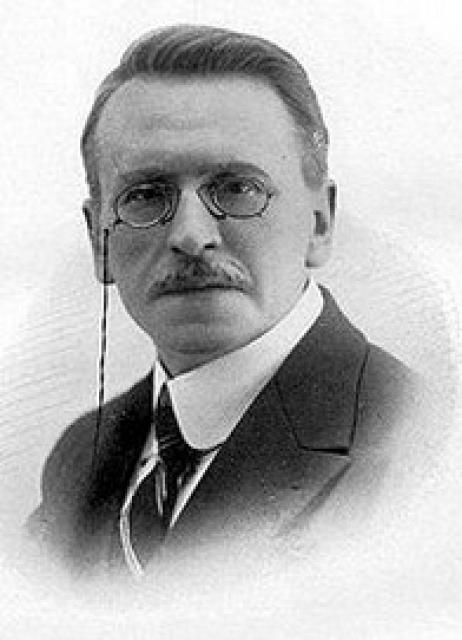
Michael Bernatskiy
- Early Life and Education
- Social and Economic Theories
- Involvement in the Provisional Government
- Involvement in the White Movement
- Legacy
Early Life and Education
Mikhail Ivanovich Bernadsky was a Russian economist who served as Minister of Finance in the Provisional Government in 1917. Born into poverty, Bernadsky began tutoring students to earn money while still a high schooler. He went on to study law at the University of Kiev, where he was retained by the department of political economy. He also attended lectures at the University of Berlin and received his master's degree in political economy in 1911.
Social and Economic Theories
Bernadsky's master's thesis criticized the views of socialists. He argued that capitalism, when socially responsible, could provide the greatest degree of personal freedom. He also believed that a global gold standard would foster cooperation among nations.
Involvement in the Provisional Government
After the February Revolution in 1917, Bernadsky became the head of the labor department in the Ministry of Trade and Industry. In July 1917, he was appointed assistant to the minister. He opposed granting extensive rights to labor unions during wartime.
From September 1917, Bernadsky served as Minister of Finance in the Provisional Government. He advocated for a universal income tax, inheritance tax, and taxation of war profits. To combat inflation, he increased indirect taxes and introduced government monopolies on tea, sugar, and matches. On October 25, 1917, he was arrested with other ministers during the Bolshevik Revolution.
Involvement in the White Movement
After his release from prison, Bernadsky joined the White Movement in Rostov-on-Don. From 1918 to 1920, he served as head of finance for the Armed Forces of South Russia. He issued treasury notes and annulled the circulation of Soviet currency in areas under White control.
After the White Army's retreat to Crimea in 1920, Bernadsky headed the "business cabinet," the final government under General Denikin. He later became Minister of Finance in the government of Baron Wrangel.
Legacy
Bernadsky's tax policies favored indirect taxes, which he believed provided a stable source of revenue. He negotiated for foreign loans in Paris, demonstrating his international financial connections. Bernadsky's ideas on economic theory and finance continue to influence discussions on economic development and social welfare.


