Michael Gaismair
 Austria
- Michael Gaismair: A Revolutionary Leader in the German Peasants' War
- Leading the Peasants' Revolt
- The "Landesordnung"
- Military Victories and Defeats
- Exile and Assassination
- Political Ideals and Influence
Michael Gaismair: A Revolutionary Leader in the German Peasants' War
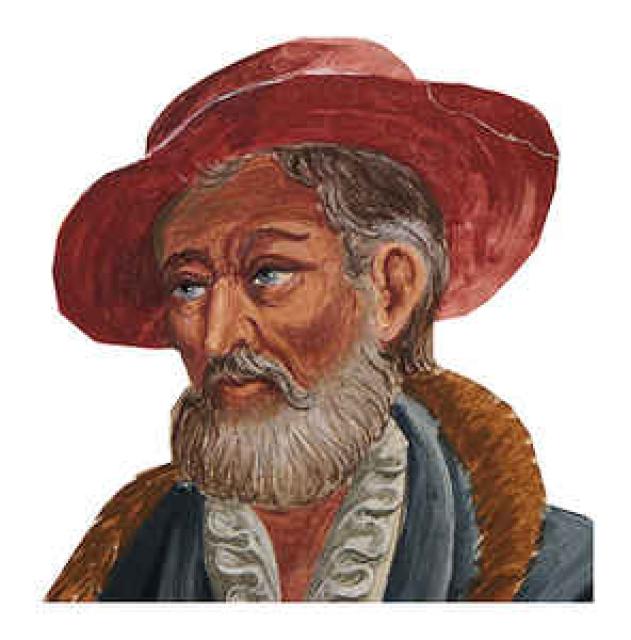
Early Life and EducationMichael Gaismair, a prominent Austrian political activist and leader of the peasants' movement in Tirol and the Archbishopric of Salzburg, was born into a wealthy family of mine owners and landowners. He initially served as a secretary to the bishop of Brixen and later to the archbishop of Salzburg.
Leading the Peasants' Revolt
During the German Peasants' War (1524-1525), Gaismair emerged as a formidable leader of the peasant forces, continuing the struggle even after the main rebellions in Germany had been crushed. With exceptional military acumen, he formed a revolutionary army composed of peasants and miners from Tirol and the Archbishopric of Salzburg, bolstered by armed groups from other regions.
The "Landesordnung"
In February-March 1526, Gaismair drafted the "Landesordnung" (Land Ordinance) for Tirol, an ambitious program outlining radical social and political reforms. The document advocated for a republican form of government, the abolition of monasteries and the use of their assets to support orphans, the democratization of courts, and the state's ownership of natural resources.
Military Victories and Defeats
Under Gaismair's leadership, the peasant army scored decisive victories, including the rout of combined Austrian and Bavarian forces at Salzburg in 1526. Gaismair subsequently began preparations for a wider uprising in Southern Germany and Austria, with Tirol serving as the focal point. However, political maneuverings by the Austrian archduke dashed these plans.
Exile and Assassination
Confronting overwhelming opposition, Gaismair's army was forced to withdraw from Tirol. He strategically led his forces out of encirclement and retreated to Venice, where he initiated negotiations with Swiss and Venetian representatives. During the negotiations, Gaismair was assassinated by a mercenary hired by the Austrian government.
Political Ideals and Influence
Gaismair's "Landesordnung" reflected his commitment to a deeply democratic and egalitarian republic for Tirol. His program featured measures against feudalism, support for the poor through church taxes, and the elimination of merchant companies. While rooted in the ideas of Thomas Müntzer's popular Reformation, Gaismair's program had unique aspects, such as his proposal to dismantle all cities except Brixen and Trent.
Michael Gaismair's leadership and political vision left an enduring legacy in the history of the German Peasants' War. His program remains a compelling document showcasing the revolutionary aspirations of the peasant movement during that tumultuous period.