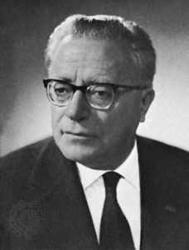
Thomas Macaulay
 Great Britain
- Early Life and Education
- Literary Success and Legal Career
- Political Career
- Service in India
- Return to England and Literary Legacy
- Death and Legacy
Early Life and Education
Thomas Babington Macaulay was born on October 25, 1800, in Rothley Temple, Leicestershire. His father, Zachary Macaulay, was a businessman, an opponent of slavery, and an editor of the "Christian Observer." Macaulay was educated at two small private schools before enrolling at Trinity College, Cambridge, where he won literary prizes for his poems "Pompeii" and "Evening" in 1819 and 1821.
Literary Success and Legal Career
Macaulay later became a fellow of Trinity College, receiving a salary of £300 per year. He was called to the bar but never practiced law. Instead, he wrote for literary journals and supported the abolition of slavery. His 1825 essay on Milton in the "Edinburgh Review" brought him widespread acclaim for his vibrant and evocative writing style, which would influence English prose for years to come.
Political Career
In 1830, Macaulay was elected to Parliament as a Whig representative for Calne. He became a prominent advocate for parliamentary reform, and his speeches were instrumental in the passage of the Reform Bill of 1832. He was appointed a member and then secretary of the Board of Control for Indian Affairs.
Service in India
In 1833, Macaulay was appointed to the Supreme Council of India, where he played a key role in establishing English as the medium of instruction in Indian schools. He also drafted the Indian Penal Code, which became law in 1860.
Return to England and Literary Legacy
After returning to London in 1838, Macaulay was elected to Parliament for Edinburgh and served as Secretary of War in Lord Melbourne's government. He was elected to the House of Commons from Edinburgh in 1852 and retired from politics in 1856. He was made Baron Macaulay of Rothley in 1857.
In his later years, Macaulay focused on his literary work. He began writing his "History of England" in 1838 and published the first two volumes in 1848. He also wrote essays for the "Edinburgh Review," published "Lays of Ancient Rome" in 1842, and a second edition of his "Critical and Historical Essays" in 1843.
Death and Legacy
Macaulay died in London on December 28, 1859. He is remembered as one of the most influential essayists and historians of the Victorian era. His "History of England" remains a classic work of British historical writing, and his literary style continues to be studied and admired.