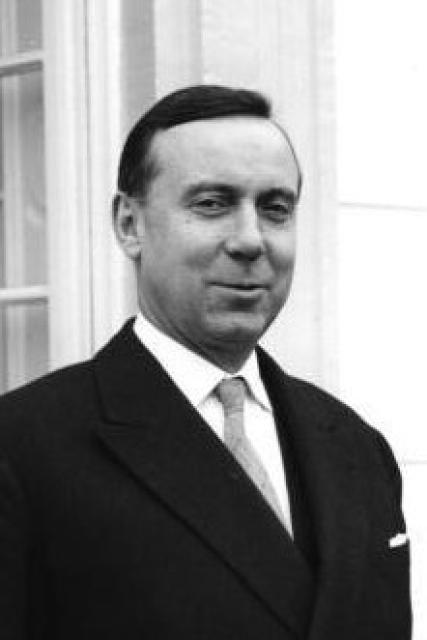
Michel Debre
 France
- Michel Debré: A Monumental Statesman
- Military Career and Early Political Influence
- Marriage and Family
- Initial Political Engagement
- Wartime Experiences and Resistance
Michel Debré: A Monumental Statesman
Early Life and EducationMichel Debré was born in Paris on January 15, 1912, to a family of physicians. Following his primary education, he attended the prestigious Lycée Montaigne and Lycée Louis-le-Grand. At the age of 16, Debré chose a path in public service and enrolled at the École Libre des Sciences Politiques while simultaneously studying law at the University of Paris.
Military Career and Early Political Influence
In 1932, Debré joined the French Armed Forces, where he developed a lifelong passion for horseback riding. He served until becoming a junior lieutenant. In 1934, at the age of 22, Debré passed the prestigious State Council exams, solidifying his position as a prominent administrative jurist.
Marriage and Family
In 1936, Debré married Anne-Marie Lemaresquier, with whom he had four children: Vincent, François, Bernard, and Jean-Louis. Bernard, despite being a physician, has also served as a deputy in the National Assembly, while Jean-Louis became President of the Constitutional Council.
Initial Political Engagement
In 1938, Debré entered the upper echelons of French politics as part of the cabinet of Finance Minister Paul Reynaud. With the outbreak of World War II, Debré left his government post and served as a cavalry lieutenant. He fought on the front lines in 1940.
Wartime Experiences and Resistance
Following France's military defeat and the Armistice with Germany, Debré was demobilized. He taught politics in Lyon before joining the Vichy government and traveling to Morocco. There, under the influence of Emmanuel Monick, he began to recognize Charles de Gaulle's importance in the fight for France's liberation. Debré joined the French Resistance, working undercover as a civilian bureaucrat while engaging in covert operations.




