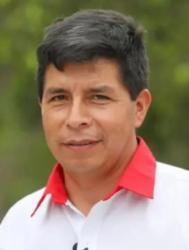
Mieczyslaw Gil
 Poland
- Early Life and Activism
- Role in Solidarity
- Strike and Arrest
- Underground and Return
- Post-Communism
- Parliamentary and Senate Career
- Policies and Views
- Later Life and Death
Early Life and Activism
Mieczysław Gil was born in a peasant family from the Staszów district of Poland. He graduated from the metallurgical-mechanical technical school in Kraków's Nowa Huta in 1963 and began working at the Lenin Metallurgical Plant (HiL; now ArcelorMittal Poland Oddział). Gil served as a converter operator and, from 1977, as editor of the factory newspaper, Głos Nowej Huty.
In 1964, Gil joined the ruling communist party, the Polish United Workers' Party (PZPR). However, he often expressed his disapproval of the policies of the Polish People's Republic (PRL). In 1968, he refused to join the party's "Workers' Militia" to disperse student demonstrations, for which he was removed from his position as a foreman. In the late 1970s, he distributed the underground bulletin KOS-KOR Robotnik and leaflets from the Student Solidarity Committee.
Role in Solidarity
In August 1980, Gil became actively involved in the mass strike movement. From September, he was part of the leadership of the independent trade union Solidarity in Kraków and the Małopolska region. He served as deputy chairman in charge of press relations under Stanisław Zawada and, from November, co-chairman with Andrzej Cira. In the first half of 1981, Gil acted as chairman of the union.
Gil adopted a radical stance in Solidarity's confrontation with the PZPR. In March 1981, after the Bydgoszcz incident, he left the communist party. He led the nationwide warning strike in Kraków on March 27, 1981, and headed the Workers' Committee of Metallurgist (KRH). Despite his radicalism, Gil maintained a dialogue with the Kraków committee of the PZPR, led by the "liberal" first secretary, Krystyn Dombrów.
On May 17, 1981, Gil organized a protest march against the attempted assassination of Pope John Paul II. He headed the Polish Solidarity delegation to the International Metalworkers' Federation Congress in Washington, D.C., and participated in negotiations with the government over draft laws on trade unions and production самоуправление. Gil was elected to the All-Polish Commission of the union as a delegate to Solidarity's first congress.
Strike and Arrest
On December 13, 1981, martial law was imposed in Poland. Power was transferred to the Military Council of National Salvation (WRON) and the informal "Directorate" of General Jaruzelski. The military-party regime banned Solidarity and strikes and interned thousands of activists. General Sulima was sent to govern Kraków, and Colonel Mazurkiewicz to manage HiL.
Gil was among those targeted for internment in Kraków. However, he managed to escape from his apartment when the police arrived to arrest him. He reached HiL and, together with workers Stanisław Handzlik and Jan Ceśelski, headed the strike committee. Gil signed all decrees and appeals of the committee and negotiated with the company's administration and the military authorities.
The strike continued until December 16, when it was crushed by ZOMO forces with army support. Gil managed to evade capture once again. For a month, he remained in hiding. On January 13, 1982, he was finally apprehended and, after two days of internment, arrested and charged. He was sentenced to four years' imprisonment and held in prisons in Kraków, Racibórz, Strzelce Opolskie, Kłodzko, and Strzelin.
Underground and Return
On November 25, 1983, after martial law was lifted, Gil was released under an amnesty. However, he was refused employment and a disability status. He lived in his family home in Gace-Słupecka and worked on the family farm. He remained active in the underground structures of Solidarity and the Pastoral Care for Working People, a dissident Catholic organization linked to the union.
In 1984, Gil joined the Christian Intelligentsia Club and helped establish the Stefan Wyszyński Christian Workers' University in Kraków. He was also a co-founder of the Civic Initiative for the Defense of Human Rights from Violence. On October 23, 1986, he revived the KRH with Handzlik, Ceśelski, and Edward Nowak. During this time, he faced numerous detentions and interrogations by the Security Service (SB).
Post-Communism
In spring 1988, a new wave of strikes began in Poland. Gil, Handzlik, and Ceśelski led the strike committee at HiL. The strike lasted from April 26 and was suppressed by ZOMO on May 5. Gil was beaten and arrested but was released two weeks later with the support of the Kraków archdiocese.
By the September strikes of 1988, the authorities had ceased to suppress them. Representatives of the PZPR and Solidarity negotiated at Magdalenka, with Gil participating. Solidarity was reinstated, and Gil became a member of the Civic Committee "Solidarity" (KOS) under Lech Wałęsa. He actively re-established the Kraków профцентр and led the KRH and the Solidarity organization in Nowa Huta.
Parliamentary and Senate Career
In the 1989 parliamentary elections, Gil was elected to the Sejm as a KOS representative, receiving over 89% of the vote. In 1990, he headed the Solidarity parliamentary club. He supported the election of Wałęsa as president of Poland in 1990.
In the 1991 parliamentary elections, Gil was again elected to the Sejm from Kraków's right-wing coalition, "Solidarity with the President." From 1998 to 2002, he served as a councilor in the Sejmik of the Małopolska Voivodeship, representing the Electoral Action Solidarity.
In 2001, Gil joined the Electoral Action Solidarity Right coalition, but was not elected to the Sejm. In 2005, he ran unsuccessfully for the Senate as a candidate for the Center Party. In the 2011 elections, he was elected to the Senate from the conservative Law and Justice party (PiS). He remained a senator until 2015 and participated in the parliamentary investigation into the Smolensk air disaster.
Policies and Views
Gil held right-wing Christian democratic views. He joined the Party of Christian Democrats in 1996 and the Polish Christian Democrats Agreement in 1999. From 2011, he aligned himself with Jarosław Kaczyński's PiS.
Gil's ideology combined class-based perspectives with the social doctrine of Polish Catholicism. He emphasized the decisive role of the workers' movement in Poland's liberation and positioned himself as a representative of the working class. He advocated for state support for industry, restrictions on foreign capital in banking, and social regulation of the economy.
Gil criticized the situation in which "the beneficiaries of the reforms were post-communists, not the people of Solidarity." He called for the creation of a political party within Solidarity, which was partially realized by the union's affiliation with PiS. He urged a return to the ideals of early Solidarity and described his role in parliament as "the conscience of the working people, in a way."
Later Life and Death
In addition to his political career, Gil was a journalist, public activist, and economic expert. He actively organized aid during the devastating floods in 1997. In the 1990s, he founded the Kraków newspapers Czas Krakowski and Nowa Gazeta. From 2005, he served as an advisor to the Warsaw-based Industrial Development Agency. Gil was also a member of the Polish branch of the Catholic charity Kirche in Not and a co-founder of the Good State Foundation. He was the chancellor of the chapter of the "Unshakable in Word" medal.
Gil was married and had two children. He passed away in Kraków at the age of 78. The first information about his death was announced by the Kraków branch of the Institute of National Remembrance.