 |
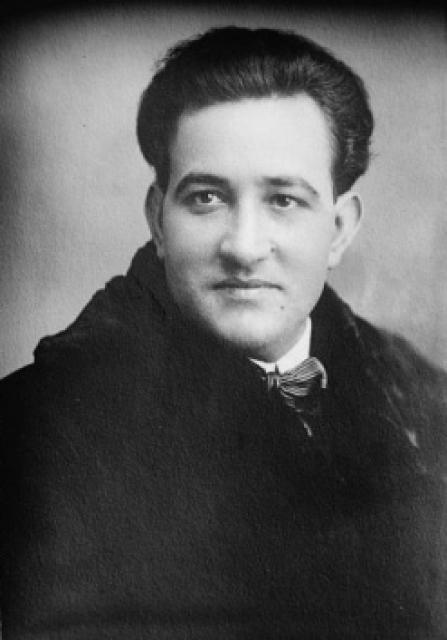
Miguel FletaSpanish opera tenor
Date of Birth: 01.12.1887
Country:  Spain Spain |
Content:
- Biography of Miguel Fleta
- Early Life
- International Success
- Artistic Skills and Decline
- Personal Life and Legacy
Biography of Miguel Fleta
Miguel Burró Fleta, a Spanish opera tenor, was considered one of the most significant Spanish opera artists of the first half of the 20th century. Despite his short performing career, which lasted from 1919 to 1935, Fleta was well-known internationally and performed at La Scala, Milan from 1923 to 1926 and the Metropolitan Opera in New York from 1923 to 1925. On April 25, 1926, Fleta became the first performer of the role of Calaf in Giacomo Puccini's opera "Turandot," under the direction of Arturo Toscanini, after the composer's death. However, this demanding role pushed Fleta to his limits, and he did not return to it again.
Early Life
Miguel Fleta was born on December 1 (according to other sources, December 28), 1897, in the small town of Albalate de Cinca in the Huesca Province of Aragon, Spain. His father, Vicente Burro Gayán, was the town treasurer during the First Spanish Republic. Miguel was the youngest of fourteen children, of whom only half survived into adulthood. He made his operatic debut in 1919 in Trieste after studying vocal technique at the Madrid Conservatory.
International Success
Following his notable debut, Fleta's successful performances in Rome led to engagements at La Scala and the Metropolitan Opera. Unfortunately, he left the Metropolitan Opera under unpleasant circumstances. Severe pharyngitis almost ended his career, and his lavish lifestyle in America led to financial difficulties. As a result, a court ruling prohibited Fleta from performing in the United States again.
Artistic Skills and Decline
During the peak of his career, Miguel Fleta was praised for his mastery and the flexibility of his rich voice. He excelled in the bel canto technique, effortlessly executing impressive messa di voce, showcasing his excellent vocal preparation. However, as his career progressed, Fleta became more indulgent in his weaknesses, and the audience noticed. Recordings show a decline in the quality of his vocals by the 1930s. Nevertheless, Fleta continued to tour with concerts outside of Europe, primarily in Japan, China, and South America.
Personal Life and Legacy
Miguel Fleta was married to Luisa Pierrick, with whom he had two children. Their relationship was tumultuous, and they divorced in 1926. After leaving the Metropolitan Opera, Fleta married Carmen Mirat Rúa in Salamanca, Spain, and they had four children together. Fleta's daughters, Elia Fleta Mirat and Paloma Fleta Mirat, gained popularity as performers of light entertainment music and jazz compositions from the 1950s to the 1970s.
Miguel Fleta passed away from uremia on May 29, 1938, in A Coruña, where he had moved during the Spanish Civil War. He left behind a collection of remarkably beautiful recordings, many of which have been reissued on CD in recent times. Fleta was proficient in the operatic repertoire of his time, successfully performing roles such as Radamès in "Aida" and Don José in "Carmen." He also recorded "Tosca," "I puritani," "La Bohème," and even Wagner's "Lohengrin," as well as several zarzuelas, classical songs, and popular melodies. Fleta also appeared in one feature film and two documentaries.


