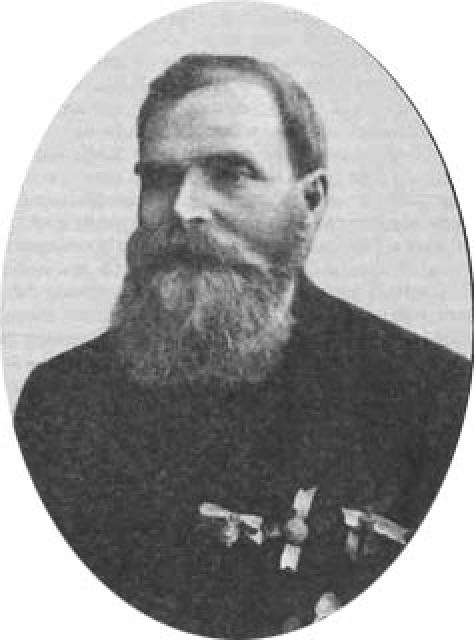
Mihael Petrov
 Russia
- Biographical Profile of Vasilii Petrov
- Early Life and Political Activism
- Leadership Legacy
- Internal Conflicts
- Declining Influence
- Electoral Performance
- Political Demise
- Post-Revolutionary Legacy
Biographical Profile of Vasilii Petrov
Vasilii Petrov, a resident of Shuya in the Vladimir Governorate, played a central role in the political landscape of early 20th century Russia as the founder and lifelong chairman of the Union of Russian Orthodox People in the city of Shuya and Vladimir Governorate.
Early Life and Political Activism
Born in Shuya to a tradesman family, Petrov established a painting workshop in his hometown. In November 1905, he founded the Union of Russian Orthodox People, an organization that aimed to promote monarchism and conservative values. Petrov actively engaged with prominent figures of the Union of Russian People (SRN), including A. I. Dubrovin and A. I. Trishchatyi.
Leadership Legacy
While Petrov declined Trishchatyi's proposal to fully merge with the SRN, he remained an active participant in various right-wing gatherings, representing the Union at the 5th All-Russian Congress of the SRN in Moscow in 1911. Petrov's leadership was marked by a compilation of statutes and program documents that heavily borrowed from the SRN's own.
Internal Conflicts
Despite his sincere monarchist beliefs, Petrov's ambition and contentious demeanor led to conflicts with both civil and ecclesiastical authorities. His lack of support hindered many of his initiatives, such as the establishment of a "Russian" pharmacy and the placement of the Union's banner in the city cathedral.
Declining Influence
Petrov's insistence on absolute leadership resulted in the exclusion of his closest associates, negatively impacting the Union's reputation and membership. Despite his attempts to present a facade of power to the SRN's central organs, the Union faced a steady decline in its influence. The organization's numbers dwindled to a mere 8-15 members by 1914.
Electoral Performance
Petrov's political sway was further diminished by his dismal electoral results. He received only a handful of votes in subsequent Duma elections, revealing his waning influence within the community.
Political Demise
Despite his attendance at the All-Russian Monarchist Conference in 1915, Petrov's political career came to an abrupt end in 1916 when he was sentenced to seven days in prison for оскорбление оскорбление (an offense similar to slander).
Post-Revolutionary Legacy
Petrov faced no persecution after the 1917 Revolution, though his name remained tarnished in the local Soviet press. He passed away in Shuya around 1928, and his grave has since been lost.


