Mihaly Zichy
 Hungary
- Mihály Zichy: Hungarian Master of Art and Illustration
- Artistic Success in Vienna
- St. Petersburg and the Imperial Court
- Recognition and Patronage
- Watercolor Masterpieces
- Later Years and Influence
- Legacy and Controversy
Mihály Zichy: Hungarian Master of Art and Illustration
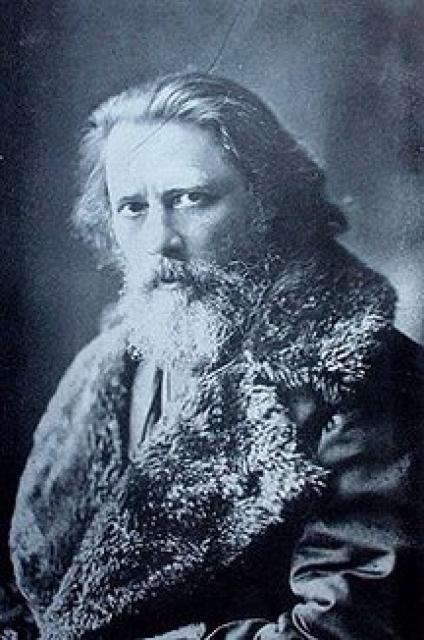
Early Life and EducationMihály Zichy was born into a noble Hungarian family in 1827. He received his early education in Budapest, where he later pursued his artistic studies under the guidance of Italian painter Marostoni. Zichy then moved to the Vienna Academy of Fine Arts, where he became a pupil of renowned Austrian artist F. G. Waldmüller.
Artistic Success in Vienna
During his time in Vienna, Zichy gained recognition for his sensitive and realistic paintings. His works exhibited at the Viennese Academy, such as "The Convalescent Girl Praying Before the Madonna" (1844), "The Dying Knight" (1844), and "The Sealing of a Child's Coffin" (1845), showcased his exceptional talent.
St. Petersburg and the Imperial Court
In 1847, Zichy was summoned to St. Petersburg by Grand Duchess Elena Pavlovna to tutor her daughter in painting. He relocated to the Russian capital, where he also provided private lessons to members of the aristocratic elite. However, financial difficulties forced him to seek other means of income, including drawing for commercial purposes and retouching photographic portraits.
Recognition and Patronage
Zichy's fortunes improved with the visit of renowned French writer Théophile Gautier to St. Petersburg in 1858. Gautier dedicated a chapter of his book "Voyage en Russie" to Zichy, which greatly enhanced his reputation in Russia. In 1859, he was appointed court painter, a position he held for 15 years. During this period, he produced numerous sketches depicting court events, hunting scenes, and caricatures.
Watercolor Masterpieces
Zichy's artistic prowess was further celebrated in 1856 when he was commissioned to capture the coronation of Emperor Alexander II in a series of watercolor studies. For this work, he was awarded the title of Academician by the St. Petersburg Academy of Arts. A major exhibition of his works was held in 1869.
Later Years and Influence
In 1874, Zichy moved to Paris, where he continued to produce drawings and paintings. Notable works from this period include "Austrian Empress Elisabeth Laying a Wreath on Deák's Tomb" (1884). Zichy died in St. Petersburg in 1906.
Legacy and Controversy
Mihály Zichy's legacy is marked by his exceptional draftsmanship, his ability to capture the nuances of human emotion, and his satirical wit. His works have been praised for their technical skill, their imaginative power, and their reflection of the social and cultural milieu of his time. However, some of his drawings, particularly those of a risqué or pornographic nature, have drawn both admiration and controversy.