Vasiliy Zabashta
 Ukraine
- Vasili Ivanovich Zabashta
- Military Service
- Post-War Artistic Career
- Creative Breakthrough
- Later Years
- Legacy
- Personal Life
- Additional Paintings by Vasili Ivanovich Zabashta
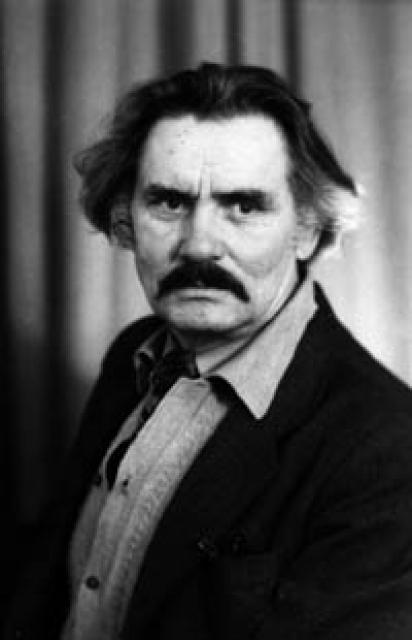
Vasili Ivanovich Zabashta
Early Life and EducationVasili Ivanovich Zabashta was born on July 18, 1918, in the village of Babenkovo, Kharkiv Oblast, Ukraine. As a child, he displayed a precocious talent for drawing and began his artistic journey by sketching on the walls of his home and fences. At the age of 12, he created his first oil painting, a portrait of his uncle.
Zabashta's early mentors included artists Vladimir Yakovenko and Victor Savin. In 1938, he enrolled in the Kharkiv Art School, where he received instruction from prominent teachers such as K. Gripih, A. Golovashon, and V. Kasiyan. His talent was evident even as a first-year student, as his painting "Attack on the Villager" earned him accolades in a university competition.
Military Service
In 1939, Zabashta was drafted into the Red Army and fought in the Winter War against Finland. He sustained a serious injury during his first battle and spent several months in hospitals.
Undeterred, Zabashta returned to the front as a volunteer in 1941 when the Great Patriotic War broke out. He served on the South-Western, Bryansk, and 1st Ukrainian fronts and was injured again in 1942. Despite his injuries, he rejoined the army in February 1943 and fought his way from the Battle of Kursk to the liberation of Berlin and Prague.
Zabashta's heroic actions earned him the Order of Glory, 2nd and 3rd class, and numerous medals.
Post-War Artistic Career
After the war, Zabashta returned to his artistic studies in 1945, enrolling in the Kyiv State Art Institute. Under the guidance of Karp Trokhiminko, he developed his skills as a historical painter.
Zabashta's first major work, "Prisoner Taken," completed in 1949, drew inspiration from his wartime experiences. He continued to explore themes of war and its aftermath in subsequent paintings such as "Victory Salute" (1975, 1978) and "Sons Do Not Return from the Campaign" (1984).
In 1955, he graduated from the Kyiv State Art Institute and pursued further studies as an aspirant (postgraduate student). His thesis work, "During the Occupation," examined the experiences of a female partisan during World War II.
Creative Breakthrough
The 1960s and 1970s marked a time of artistic transformation for Zabashta. He sought to explore his own perspective as an artist and a Ukrainian citizen. He became acquainted with survivors of Stalin's prison camps and other individuals who could provide insights into Ukraine's tumultuous history. These encounters inspired him to create a series of powerful portraits capturing their struggles and resilience.
Zabashta also developed a deep appreciation for traditional Ukrainian folk art after meeting sculptor and ethnologist Ivan Honchar. His works began to reflect the vibrant colors and motifs of folk traditions.
Later Years
In the 1980s and 1990s, Zabashta spent much of his time working en plein air (outdoors), capturing the landscapes of his homeland. He also became an active advocate for the preservation of Ukrainian cultural heritage, serving in the Society for the Protection of Historical and Cultural Monuments.
The Chernobyl disaster in 1986 had a profound impact on Zabashta, leading him to create works that explored both the environmental and human toll of the tragedy.
Legacy
Zabashta spent over five decades as a professor at the Kyiv State Art Institute, later known as the Ukrainian Academy of Visual Arts and Architecture. In 1993, he established the academy's Landscape Painting Department, which he headed until his passing.
Zabashta produced over 900 works during his lifetime, including approximately 200 thematic paintings. His works are held in collections around the world, including numerous museums in Ukraine.
Personal Life
Zabashta was married to Lyudmila Ivanovna Zabashta. They had two children, Galina and Rostislav. He passed away in Kyiv, Ukraine.
Additional Paintings by Vasili Ivanovich Zabashta
"S. Gulak-Artemovsky and M. Glinka" (1951)"Tchaikovsky at N. Lysenko's" (1949)
"Lesya Ukrainka and N. Lysenko" (1969)
"At the Guest House" (1975)
"Revenge" (1971)
"I. Franko at the Stage" (1952)
"P. Sahaidachny and Halshka Hulavechivna" (1990-2000)
"T. Shevchenko and Members of the Cyril and Methodius Brotherhood" (1989-2000)
Portraits of N. Sharlemang (1969), H. Kolyada (1976), H. Tkachenko (1977), S. Taranyushenko (1989), T. Shevchenko (1986)